Posted on Leave a comment

English Version-Dutch Vilt Magazine Interview, Winter 2025

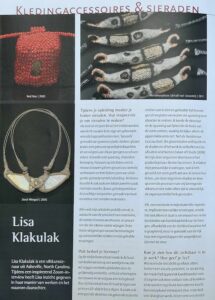
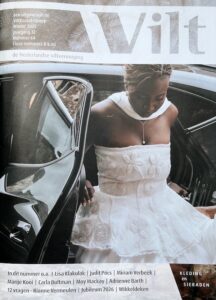
I was asked for an interview for the Winter 2025 issue of Vilt, a magazine by Viltkontatgroep, a Dutch felting organization. Nelleke van Andel presented many thoughtful questions and in return, I spent considerable time contemplating my answers and noting relational examples of my work.  In agreement with the magazine, I am publishing the full four page interview in English on my website blog, INTRIGUE. The red text and most images are links. Enjoy!

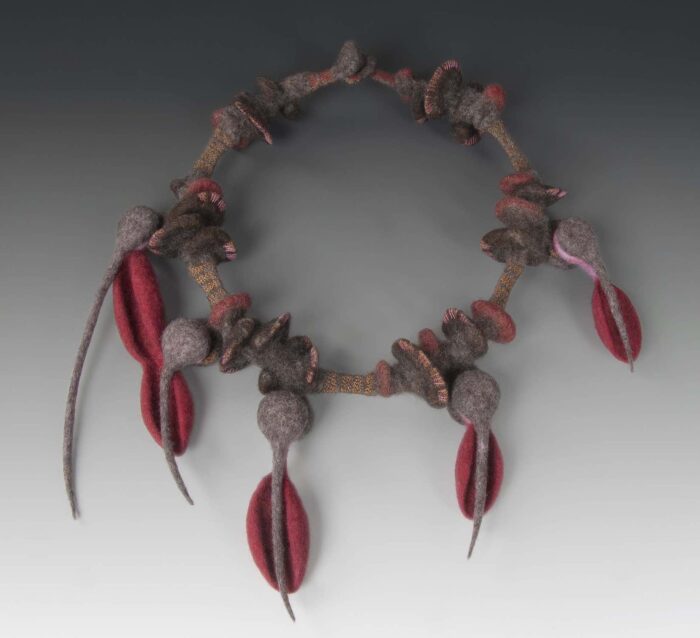
Cover: Dress by Charity van der Meer
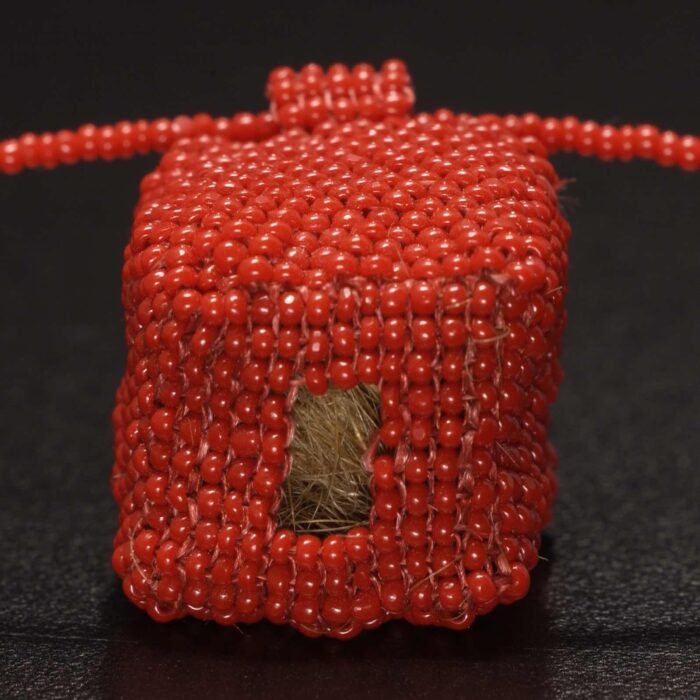
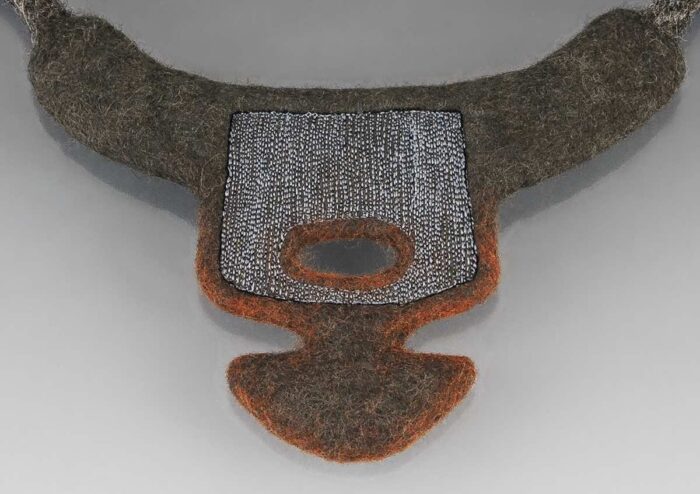
Red Box, 2005. photo: John Lucas

What inspired you to make jewelry?

As an 80’s kid from the mid-west USA, there was a craft craze of knotted friendship bracelets, lanyards made of woven plastic strips and glass seed beads patterned on safety pins and threaded together on shoe laces. I learned about tension, spacing and movement. Focusing on something small and building something new provided a sense of control, confidence and pride during years of challenging family dynamics/divorce. Wearing my creations was a badge like the embroidered patches signifying accomplishments on the sash of my Brownie and Girl Scout uniforms. As a teen, there was also a local jewelry store that I often visited with my mom and I was mesmerized by the chunky compositions made from wood and other nonmetal materials.

Explain/Translate this quote from your artist statement. “All encompassing of my artistic practice is an attention to the porosity of materials, the space within and between, and processes that modify that internal space. These micro-environments provoke memories of spatial relations in my lived experiences.” 

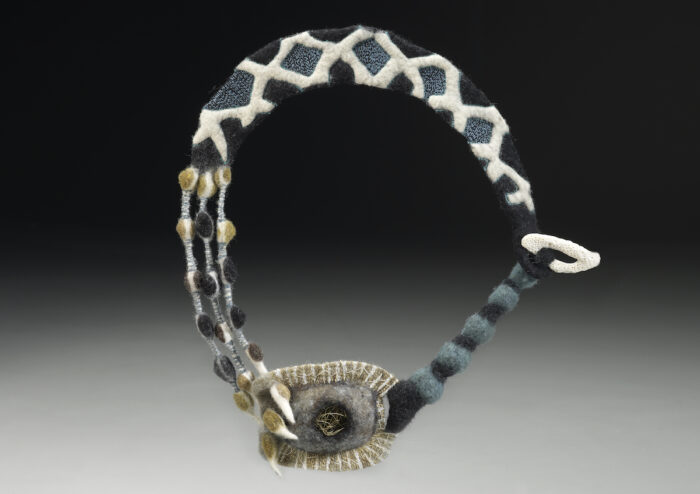
Steel Winged, 2005. photo: John Lucas

In high school, I learned basic bead weaving on a loom, that is pushing a string of glass beads through the evenly spaced, vertical warp threads and then threading a weft thread through the top of the bead holes to secure them in a 2D plane. I was also using gourd stitch to interlock beads in the round to create undulating tubes and using the addition and subtraction of beads to create tension around objects. I knew the mesh work and tension of lines that created the armature of the form, where the viewer sees only the surface form. Like the glass bead artist, Liza Lou smashing the glass beads to reveal the threads and the labour in Classification and Nomenclature of Clouds (2018), it is these unseen structures in the making process that fascinate me. I relate my personal experiences, what I have felt that gives shape to who I am and how I am, to these unseen threads and these tensioning processes of free-motion stitching and wet felting that I eventually found as a means of expression.

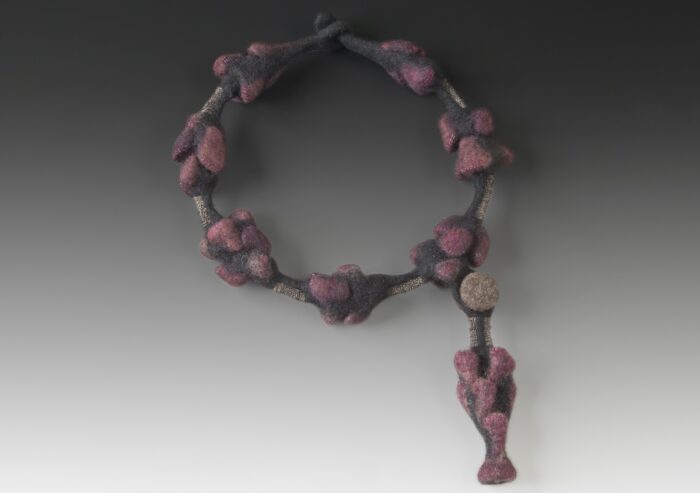
Incremental Metamorphosis, detail, 2011. photo: Mary Vogle
AVAILABLE FOR PURCHASE, Disheveled by a Perm, 2016. photo: Steve Mann

“Felt, a constant in my material repertoire, implicates human experiences, as it is not only able to visually convey a range of states of vulnerability depending on the density to which it has been agitated, but is made of animal hair with attributes similar to our own.” Can you tell how this is visible in your work? How you teach?

Wool fibers that have not been densely fulled have a visual porosity, a fluffiness that makes the surface more vulnerable to abrasion and also more apt to stretch and be imprinted by external impact, an interesting idea conceptually, but not for wearable work. I am an advocate for fulled felt, STRONGFELT. Particularly, thin felt with a high percentage of shrinkage is similar to a second skin and worn over crucial and sensitive body parts like wrists, the heart, ears, feels protective. Animal hair regulates temperature, offers protection from the elements and is intertwined with the nervous system to react defensively to threat. 

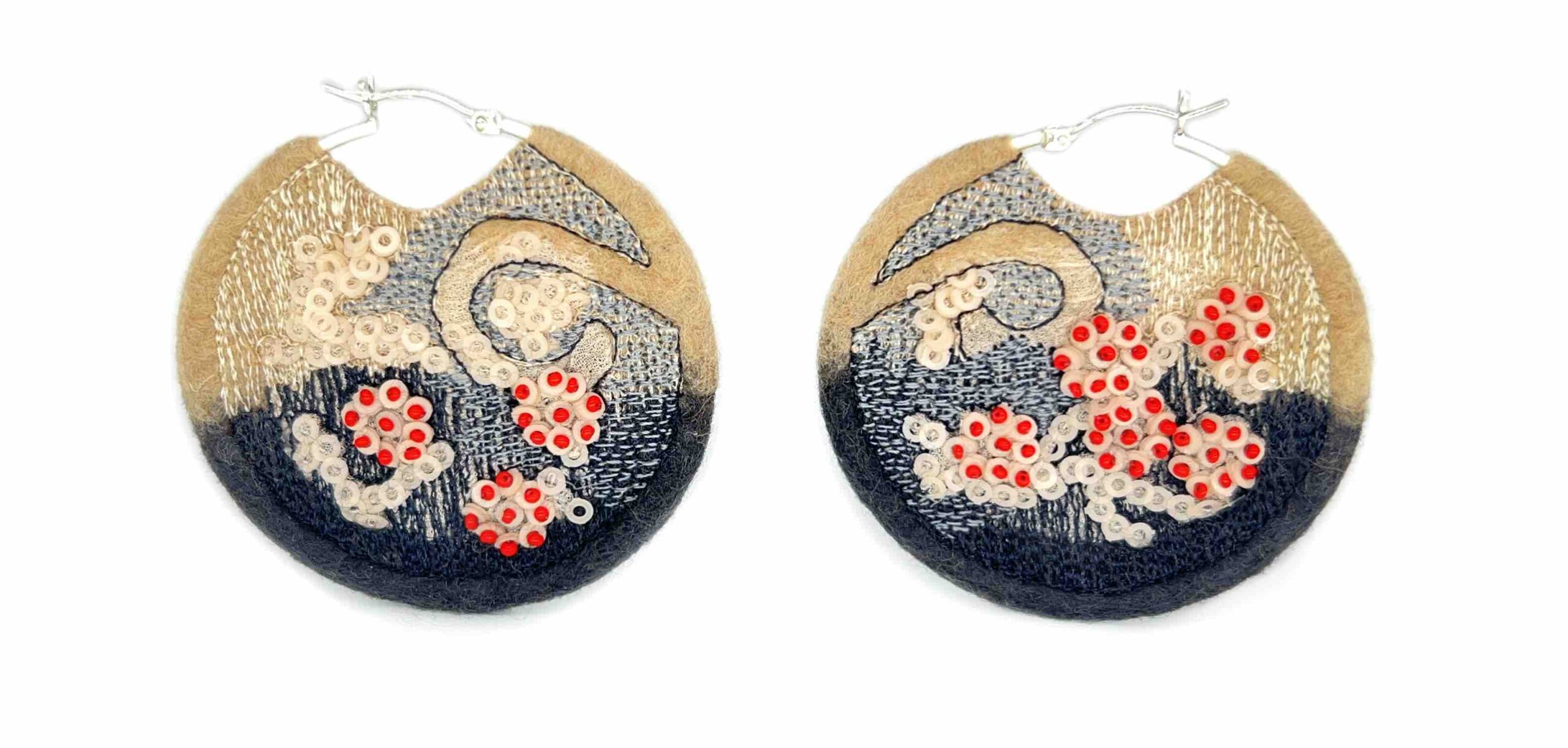
Did you know that piloerection, better known as goose bumps, is caused by muscles at the base of hair follicles contracting? Felt is borrowed hair for increasingly hairless humans. I did a series in 2016 titled, Hair is Adornment, exploring the idea of hair volume and density inspired by coming across several sets of rollers and their hair pins at a second hand store.

Knot Control, 2016. photo: Steve Mann

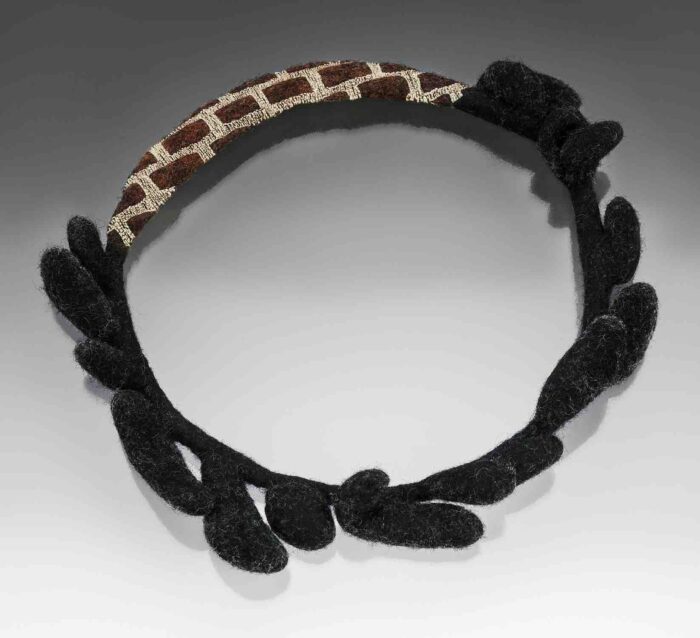
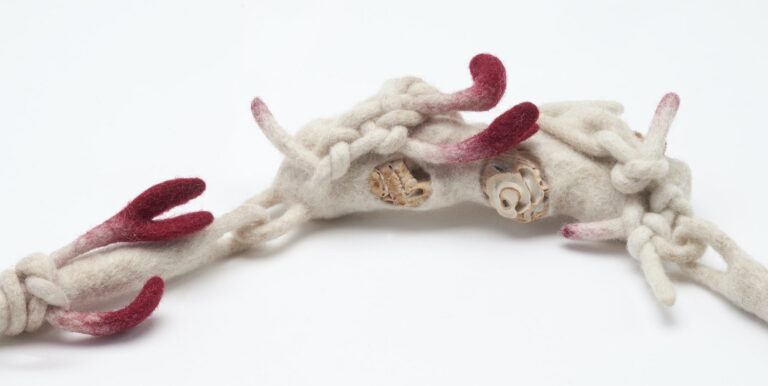
These ideas of vulnerability are conveyed in my jewelry by reference to objects and phenomenon, but also using the elements and principles of design. For example: the tough pod of the Banksia seed cone; the brick wall on the backside of a necklace in contrast to the protruding forms reaching out; the flex of the soft tissue tendons that connect in contrast to the rigid taut bone; the density of a stone wall versus the translucency of letting the light in. 

Seeded Undulation, 2013. photo Mary Vogle
Behind the Scene, 2014. photo: Stewart Stokes

You reference “felting on faith” when you work thin. What is the benefit of using thin layers?

Working thin allows one to SEE and know the space between fibers that decreases with agitation. I think primarily about space when I design, layout and felt. “Felting on Faith” is a comment I’d throw around when teaching because when you know there are fibers there touching, despite being laid out soooo very thin it is hard to see them, you trust the process and are in a flow with it. Thin, high shrinkage felt has incredible strength AND drape. With the inclusion of weighted objects it has a reptilian or vertebrae like movement. In combination with dense areas of low shrinkage partial felt it can be sculpted into the most amazing of forms, a process I began teaching in 2009 as Extreme Differential Shrinkage.

Collarbone, 2015. photo: Stewart Stokes
AVAILABLE FOR PURCHASE, Process of Person, 2015. photo: Steve Mann

During workshops you explain technique and don’t work toward an outcome/product. Why do you choose this method?

I teach the way I taught myself. The study of variables and extremes has provided the knowing in mind and touch that gives confidence to tackle any idea. A well designed tool belt of techniques to move the material is far more valuable in the long run then following step-by-step directives to make a certain thing in a certain time frame, particularly without considering the why for each step. Thinking takes time! The product of my workshops is learning, the journey not the thing or its use. When I teach for longer durations such as at Penland School of Craft, college semester courses or in my 10 week Online & Onpoint! courses, I am able to teach technique and support participants in designing their own unique project, but in a couple day course, nahhh.

AVAILABLE FOR PURCHASE, Mechanoreception 2, detail. photo: Steve Mann

Travelling is a source of inspiration. Do you go travelling for inspiration or is it the other way around, that you travel and get inspired by the things you see?

This is a bit of the which comes first the chicken or the egg. Travelling can be as simple, easy and cheap as “lingering longer and looking closer” in your immediate surrounds like finding hair roller pins at a thrift store, tightly bound worm casings on a beach, the agitation lines in the web of a Writing Spider at a neighbour’s cabin. There is seemingly endless inspiration in noticing what you notice and why, both in composition/aesthetic as well as your personal story/memory that brings objects and phenomena to attention. Of course, the farther you go from your routines and cultural norms the more dramatically different the observations become.

What is the relationship for you between vulnerability-security and felt?

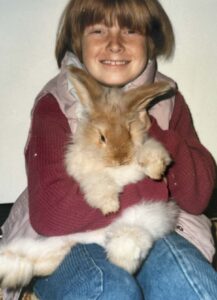
Early on in my working with wool yarn (this was learning to weave with attention to spacing both in warp/weft and difference in material shrinkage in 2002 at Penland School of Craft), I was encouraged by Janet Taylor to ask myself why I was attracted to making with a particular material and process. In addition to obvious associations of comfort through soft touch and warmth of clothing, I reminisced about caring for my Angora rabbit Haystack’s matted hair during particularly tumultuous years in my childhood. Soon after, I came across an incredible article Wool: Fabric of History, published in National Geographic 1988 with unforgettable images that brought to my attention traditional felt clothing, rugs and walls for housing and the idea of second and third skins of security for our increasingly hairless human bodies. I also researched material properties of felted wool, which offered conceptual fodder that I am still processing in my most current work: from fire suppression and moisture retention to sound proofing… felt cushions human experience.

Image not in the magazine publication, but had to add it on the blog version!

You have stripped down felt to its basic principles. Like a natural philosopher, you have explored felt: its tension, compression, density, resistance, where it wants to go, where you can push it. Have you always been a philosopher in your work?

I have always been hyper-sensitive and I have come to overstand (word choice is intentional) that that is a very wonderful and powerful attribute. I have also always been occupied by making, transforming material into something new. Being physically impacted by and attentive to my surroundings, I process this awareness of external elements, visual as well as feelings of space, movement and sound through making. I suppose I have learned to think deeply about what I am doing. This is something I try to convey to those who study felting with me: it isn’t just doing, following, but thinking about what you are doing, being attentive to the dance between your character and that of the material, process and/or object.

Can you briefly outline the development in your working methods and use of materials?

From 2002-2005, I investigated process and variables during a 3-year artist residency (when I had some of the costs of living subsidized), which culminated in a body of work for exhibition that received press and awards. Then, I focused on making unique functional items that took less time and were more saleable at markets and in my classes. This work felt like a sketchbook of ideas for when I had longer stints of time at home to make sculpture. In 2012, with a demand for teaching and increasingly weary hands, I began teaching from my home studio, made less repetitive work to sell and then stopped doing markets in 2015. I began teaching online courses in 2020 which provides more time at home to make more involved/poignant exhibition work, gives those students more time with the content and the opportunity to develop unique projects and alleviates my hands from demonstrating the same things quite so much!

Lisa Klakulak gives in-depth training online called Online & Onpoint! The training courses focus on techniques of solid form, 2D and hollow forms. Course 1 begins Feb 22, 2026. www.strongfelt.com/online-coursework/

In 2026, Lisa teaches at Vrouw Wolle in Essen, Belgium. There are two trainings: Constructed Felt Vessels: Edge Welding Cylinders and Textured Panels, June 6-10 and Advanced Pendants: Elaborate Bails & Bezels, June 12-14.  Link to the full 2026 STRONGFELT TEACHING SCHEDULE.
Posted on Leave a comment

CollaboratioNZ 2023 – Part 3 Muka Fiber in the Air and Sea

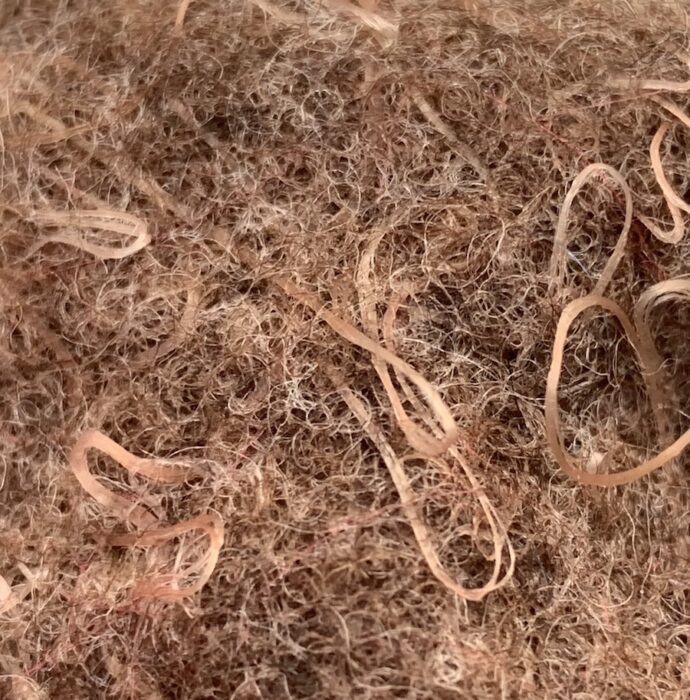
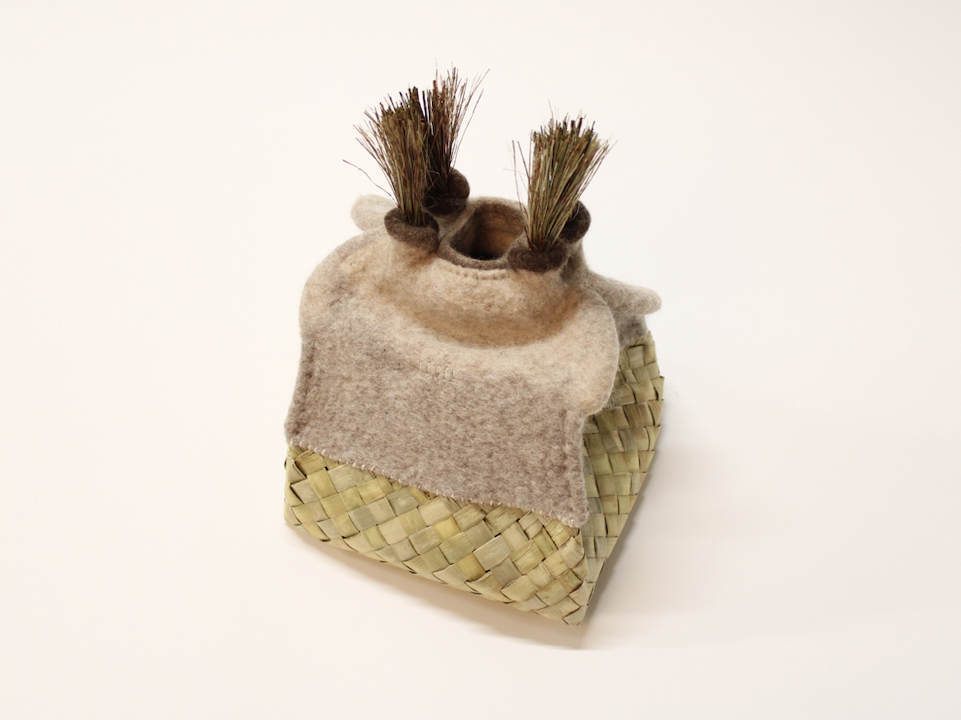
It began the first day of Collab NZ with being asked to make a small concave felt bowl for another artist. No larger than the cup of my hand, the felt was to be inserted into a cavity carved into a foam chest of a pre-existing doll to hold an anatomical heart. The easiest way to get the curved bowl and the size desired was to raise a sphere of felt from a 2D template and once fulled, or nearly so, to cut the sphere in half and seal the cut edge. With the table of harakeke weavers next door, I asked for a few strands of their processed muka fibers. I laid these on the template before wrapping the wool to see what kind of texture I could achieve with one fiber shrinking and the other resisting the inward pull and therefore, looping off the surface.

Actually, it began my first day in Auckland. Having arrived from Chicago at 6:30 AM, I made my way to the Auckland Museum within hours of arriving. The local I was staying with insisted I attend the highly regarded Maori Cultural Performance at the museum and I did. I had never seen traditional poi spinning in action (as compared to modern fire twirling) and the two wahine amazed me with the rhythm kept while also singing, sometimes with two long poi in each hand, moving in and out of the others, without whacking anyone or loosing their flow.

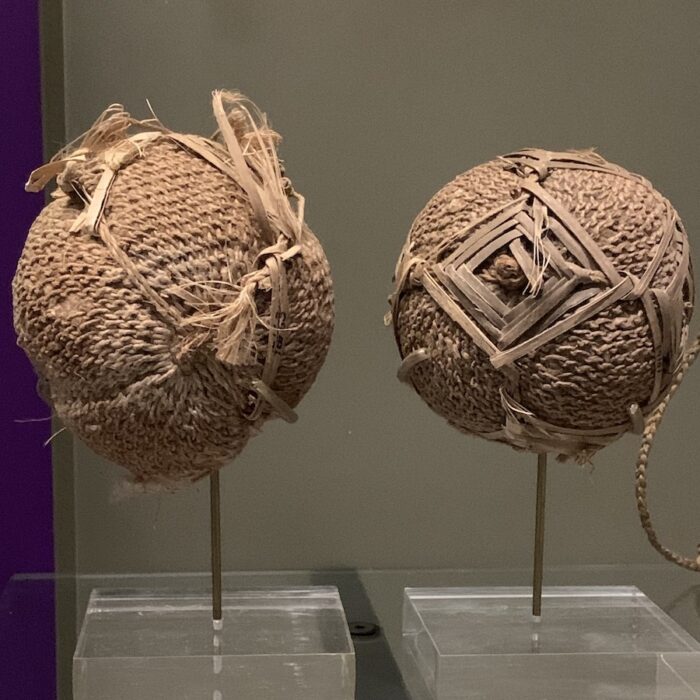
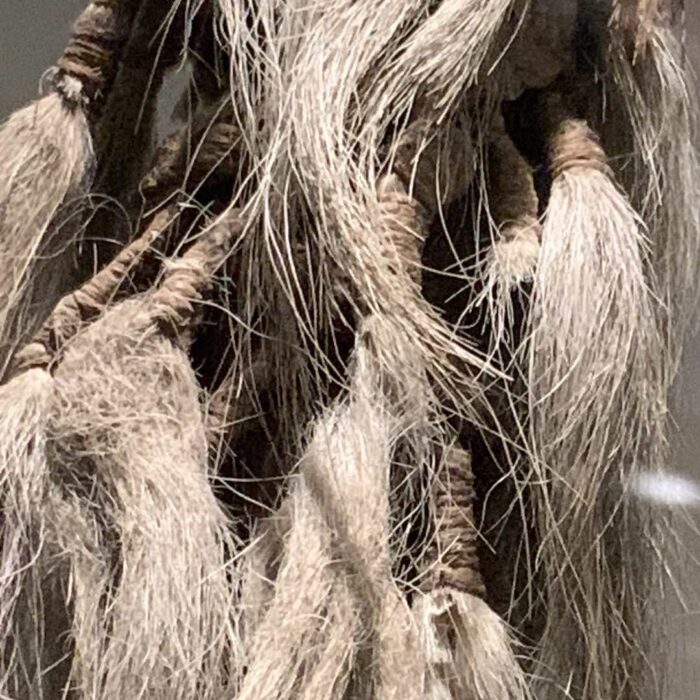
After the performance, I set eyes on this set of poi taniko made with all natural fibers in the Maori Court of the Museum. I was particularly drawn to the layering of textures. The walls of the spheres were constructed with twined muka from the harakeke plant (Phorium tenax). This fine surface was then overlayed with a diamond pattern created by wrapping strips of kiekie leaf (Freycinetia banksii) around the cross of thread. The seed heads from the raupo (Typha orientalis) were then used for stuffing the form. Here is a site online I found useful for learning more about New Zealand fibers that in many occasions were just listed by name in the museum, Manaaki Whenua/Landcare Research.

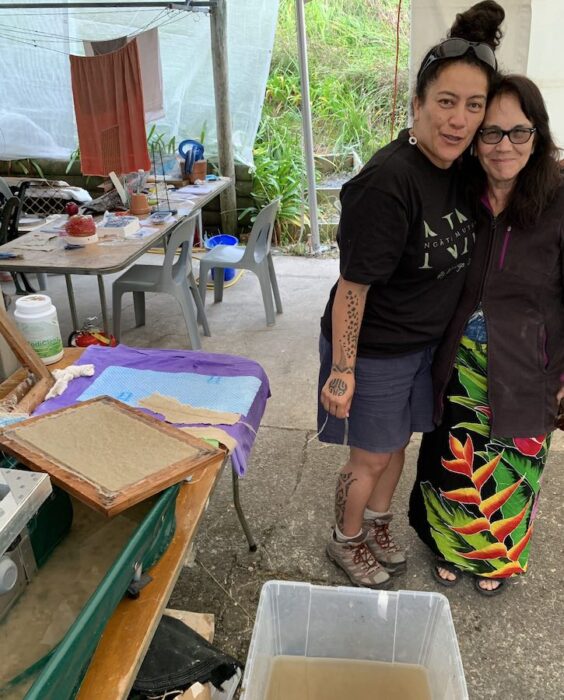
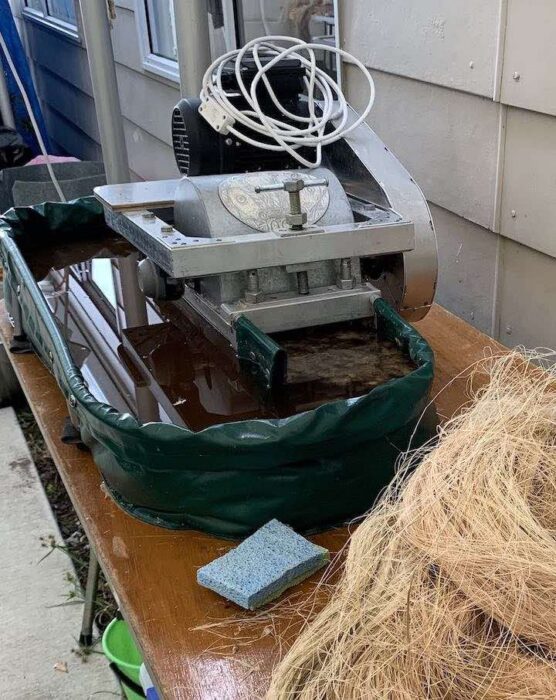
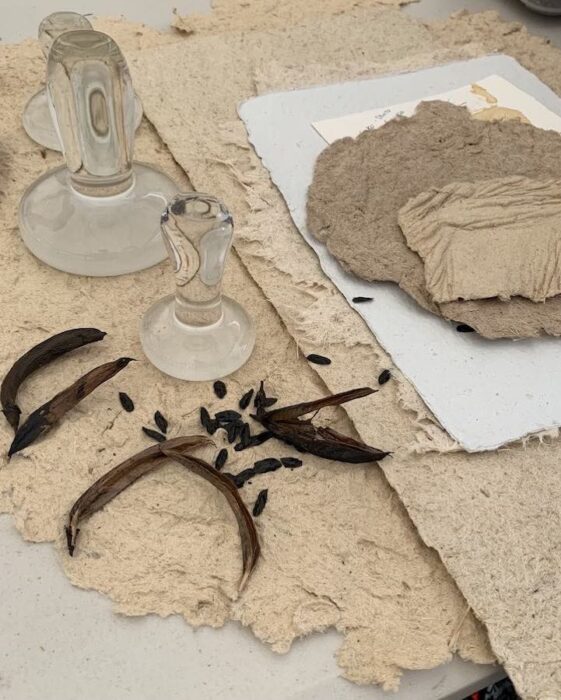
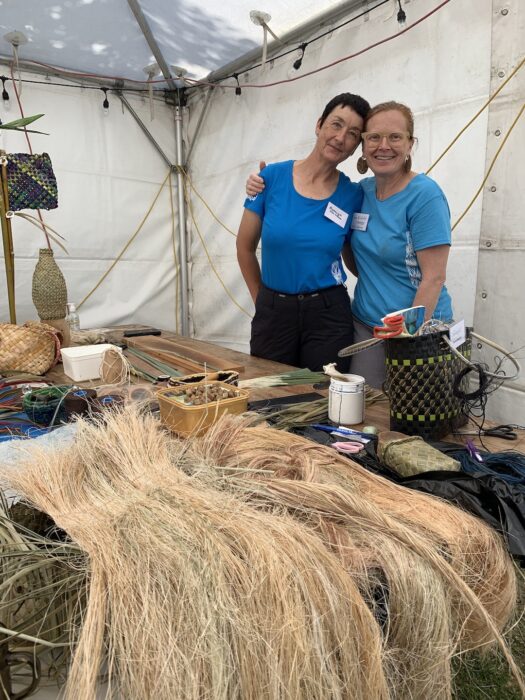
Back at Collab NZ now, meet Jo Tito on the left, a Maori artist whose work focuses on native fibers and dyes, seen here sharing a sweet embrace with Denise Wallace, a jeweler of native Alaskan Chugach Sugpiaq heritage. I invite you to look at both there websites! Jo was also set up in the fiber tent working with harakeke, but unlike the weavers I wrote about in Part 2 of my CollaboratioNZ blog posts, Coming Together, she was making paper with the fiber in the coolest transportable Hollander beater. Pictured on the right, is a collection of her papers, harakeke seed pods, their seeds and the glass muller used to make ink from the pods. A little more about the ink later in this blog posting…

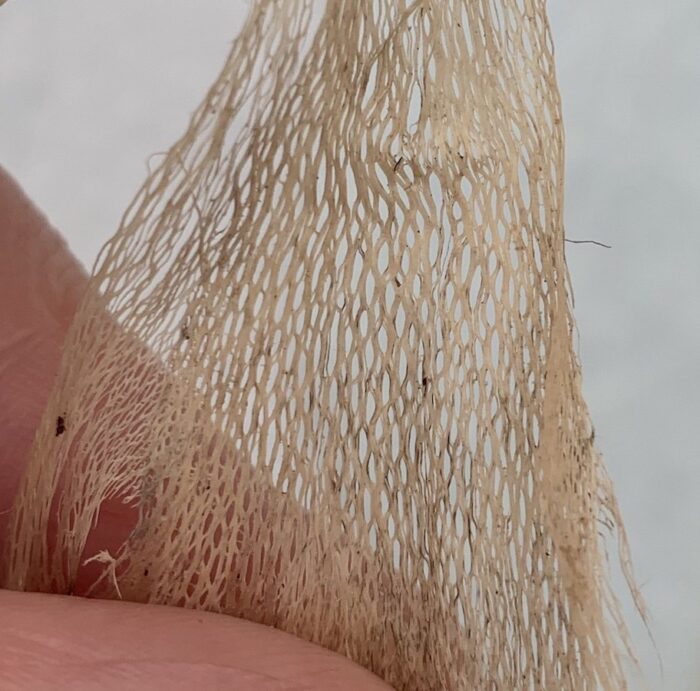
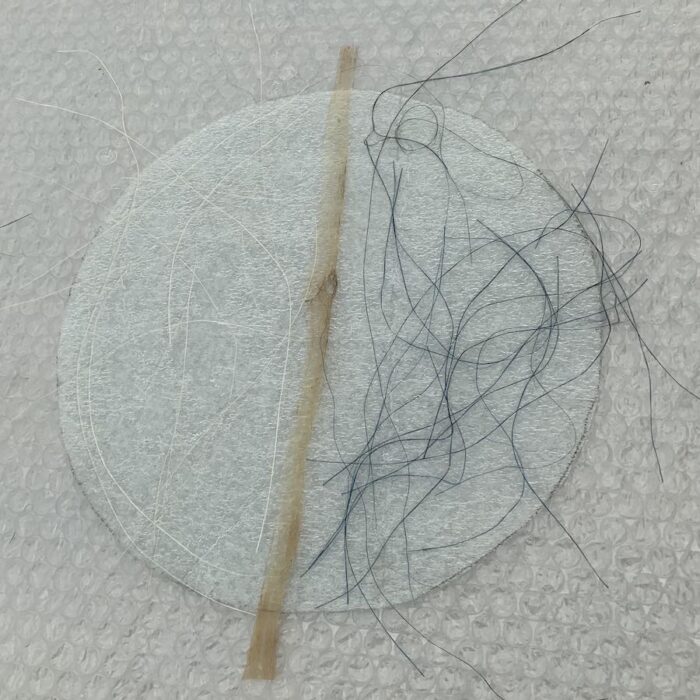
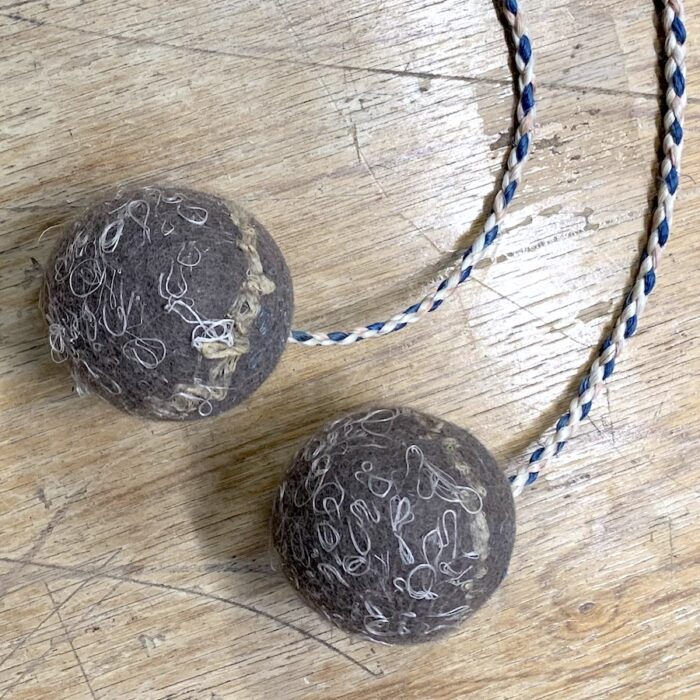
I had thought about those poi I had seen in the museum when I was felting the hollow sphere with the muka fibers looping off the surface. Wouldn’t a set of all natural felt poi be an interesting exploration for a collab? Jo generously shared her insights on the size I should make the poi and offered strips of the most amazing lace bark (Houhere) she had brought along to Collab seen in its splendid detail on the left below. I was curious how the wool fibers would move though the mesh of the bark and contort its ribbon like formation. I laid it as a center line on the template to assist me in felting the wall of the sphere consistently along with some natural muka fibers on one hemisphere and others, indigo dyed in a vat set up by Lindsay Embree, on the other half. 

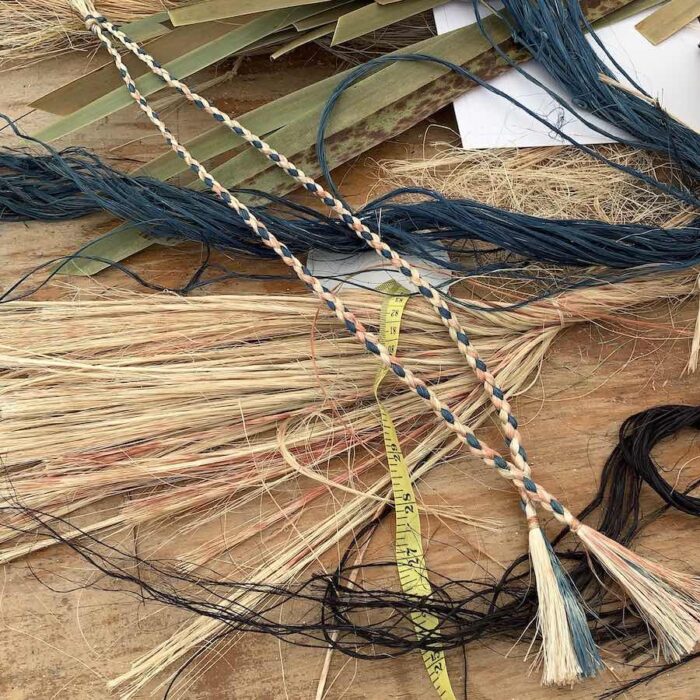
Of course, I would need ropes for the poi so they could be twirled! I had seen beautiful plaiting work done by Wendy Naepflin, one of the flax weavers, and she was game to collaborate. She knew the length for a short set of poi and suggested a four plait with muka filaments that had a natural reddish color and also those dyed in the indigo vat. How beautiful are these ropes for this set of short poi? 

The last component for these all natural poi was to determine the fill material. With all the harakeke leaf processed to reveal, isolate and soften the inner muka fiber, there was a bucket full of dried para, that scraped outer flesh of the leaf. Perfect, however, I had left only a small hole for the knotted end of the rope to be inserted into the felted sphere, so packing the para inside with the end of a wooden skewer was quite the long process. Through out it, I kept handing the set over to Jo for her to ascertain whether they felt like the right weight. Jo also guided me in my first poi spinning lessons and I found the coordination really challenging and the experience rather hilarious! Although, my spinning didn’t have near the grace of a birds flight, the golden looping muka fibers on the surface of the felt nor the skills demonstrated by the Maori women I witnessed spinning, Jo and I settled on the title, “Flight of the Muka.” 

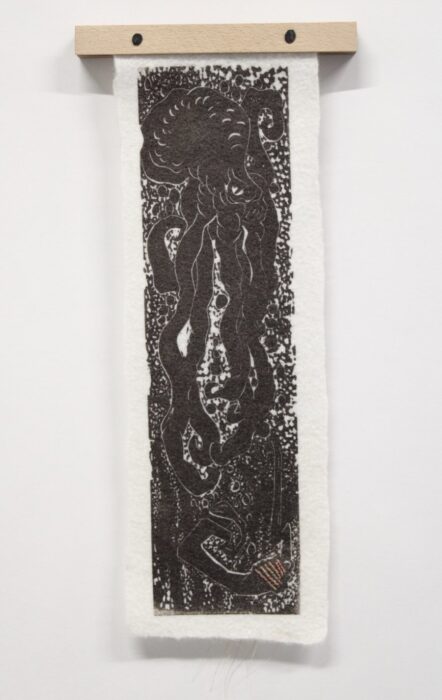
I had mentioned that Jo Tito had made some ink from the harakeke seed pods. She and Hamish Oakley Browne, a printmaker who is the director of the Te Kowhai Print Trust at the Quarry Arts Center in Whangerai, had collabed on some relief prints using the harakeke ink and paper. I was interested to see how that Korari ink would print on a fine merino wool felt and so was Hamish. He had suggested using a lino cut he had made illustrating the story of Te Wheke a Muturangi. It goes something like this, based on hearing a few renditions and reading a few more online..

A man named Muturangi had been banished by villagers to a remote island in Hawaiki, the ancestral home of the Maori. He became familiar with an octopus who then stole the bait off of the fishmermans’ lines in revenge. Kupe the explorer went to battle with the Octopus across the Pacific and this battle to slay the Octopus was responsible for shaping the Cook Strait that separates the North and South Island of Aotearoa/New Zealand.  I envisioned the battle with all 8 long arms in the water and thought about the wet felting process and the intertwining filaments.

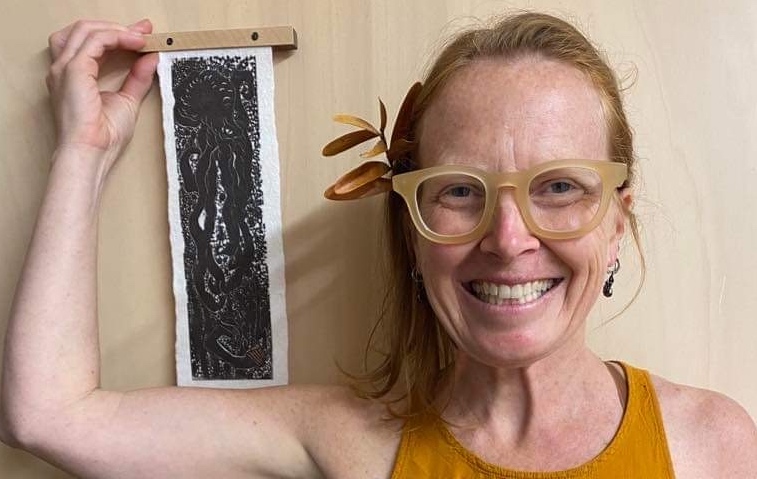
I took the measure of the lino and sized it up for 80% shrinkage and laid out a far larger area with a specific weight of wool. The finished felt was tight and suede-like especially after a nice clean shave so that the fuzz wouldn’t effect the clarity of the print. Hamish made a beauty of a print! Camilla Harmstron and I brainstormed a manner of presentation so that the luxurious drape of the high shrinkage felt would be evident and play off the visual movement of the octopus tentacles. Bex Asquith devised a wall cleat that allowed for easy hanging. Lastly, I decided to stitch several strands of muka through the felt to honor the rich tradition of fish hooks using twined muka lashing and to add a bit of warmth in color to balance the wood clamp of the hanging device.

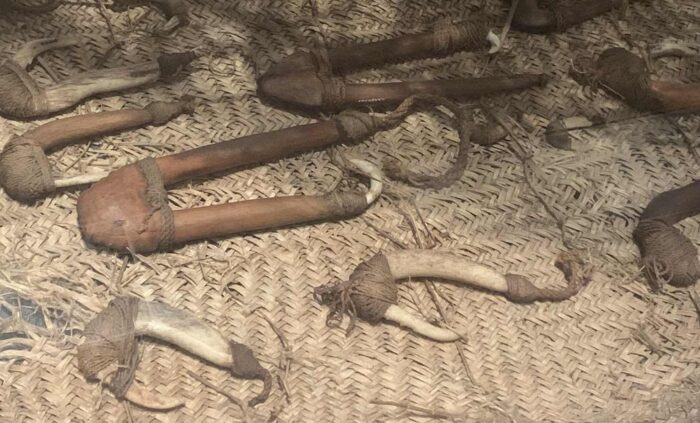
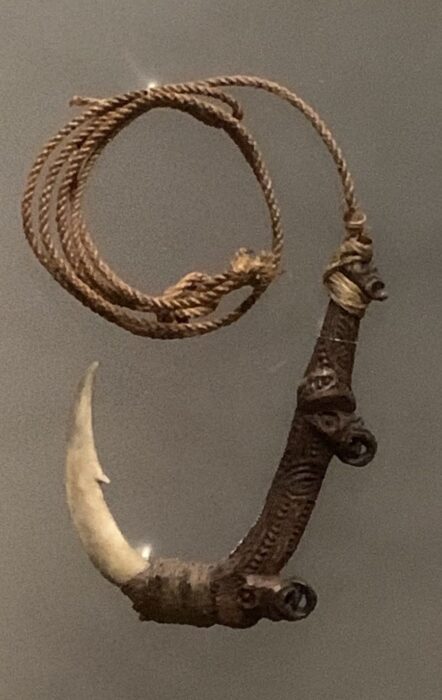
The universal use of fiber to wrap, hold and bind was certainly evident in the Maori Court of the Auckland Museum: cloaks, wall panels and mats, bags, fishing nets/traps and the lashing of tools. I took particular notice of the collection of fishing hooks with their finely twined muka lashings that bound the hook to line, but also the barb to the shank. You can observe that the largest wooden hook above appears to be two limbs that have grown in that configuration and that the bend was carved from the shared wood base/trunk. This natural growth provided more strength and therefore less lashing, just a bit of muka twine across to lessen the tension on the wood when bringing in a big one! There were so many different designs and materials matching the variety of fish and means for catching them. Some were ornately carved too, like this beauty pictured to the right.  As a maker of fiber/felt-based jewelry, I am inspired by their sizes, curves, and tapers, as well as the variation of smooth and textured areas. With life dependent on the waters, it’s no wonder that fish hooks, hei matau, became adornment representing prosperity and safe travels over the waters for the Maori.

This Part 3 of my CollaboratioNZ 2023 blog posts, Muka Fiber in the Air and Sea, concludes my documentation of pieces made in collaboration, connections started with other artists/makers and new learnings about Maori culture from this particular event. Thank you again to CollaboratioNZ Trust and the North Carolina Arts Council for your support providing this opportunity. It was an experience not to be forgotten.

Posted on Leave a comment

CollaboratioNZ 2023-Part 2 Coming Together

I had in mind (and in my grant writing) to focus on making instead of teaching, connecting with artists working in different media from across the globe and to learn more about harakeke and Maori culture during my artist residency at CollaboratioNZ. I had first been introduced to harakeke in 2012 when I was invited to teach several felting workshops in New Zealand. I was gifted flowers by a number of participants made from split and woven leaves of this NZ flax plant that I still have in my house today. I quickly learned that it wasn’t the same flax plant, Linum usitatissimum, the stalks of which are processed into linen, but rather the leaves of the native Phormium tenax, or harakeke in the Maori language, that is processed. Just like varieties of wool, there are numerous cultivars of harakeke with different characteristics that are preferred for specific uses. 

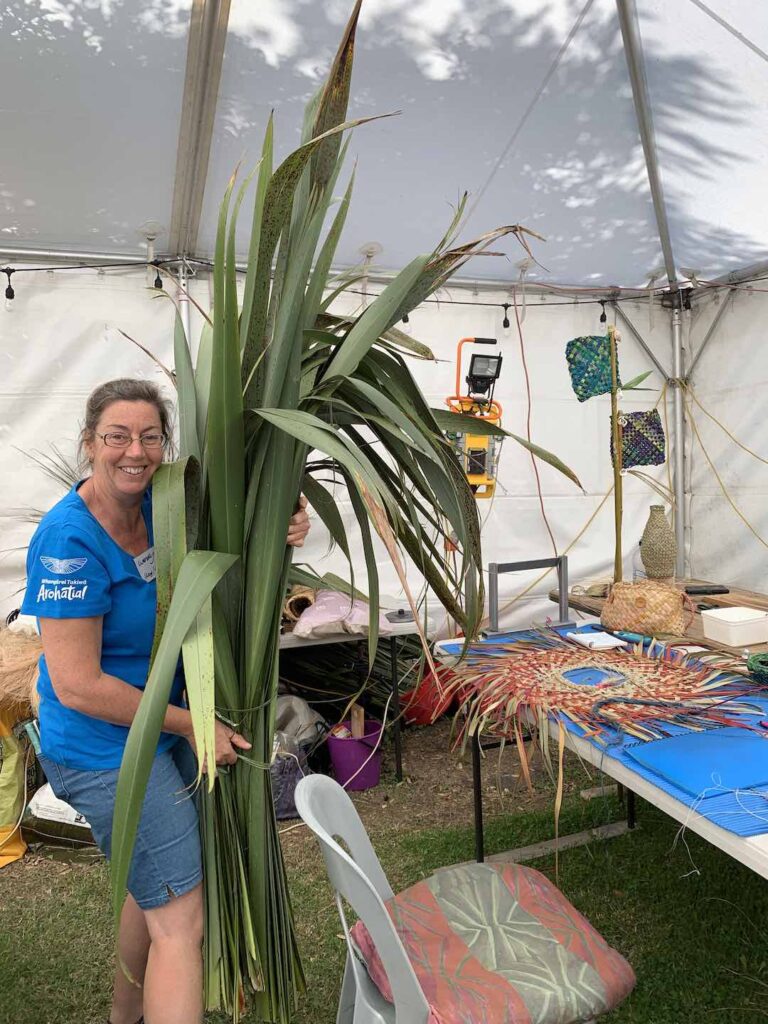
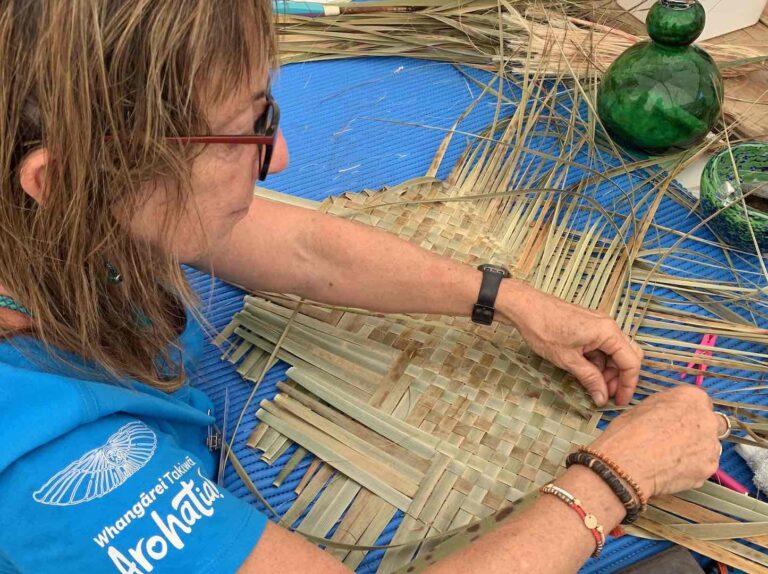
Wendy Naeplfin, a current CollabNZ committee member and flax weaver seen here with a delivery of fresh harakeke leaves, gathered me into the passenger seat of her car (leftside!) from the bus stop in the town basin of Whanagerai and we wound our way out to the headlands. Upon arriving at the camp I met two more flax weavers, Raewyn Rouse and Elke Radewald. As I brought my studio items up to the fiber tent, I realized that these three would occupy the first two tables at the entry of the tent and occupied they definitely were! There was always a steady flow of artists seeking to collab with a harakeke weaver, a sheer sign of this plants cultural relevance and appeal to not only those of Maori heritage, but a broad swath of New Zealanders.

In my first INTRIGUE/BLOG post about CollabNZ, I described the making of the piece “Structural Change” sequentially from start to finish, simply because it was the first piece I started and certainly the most time involved. However, within a couple days I had 8 different pieces I was committed to working on and every one of them incorporated harakeke!

Elke is pictured here weaving strips of the harakeke leaf into a 2D plane while a line up of glass pieces await a fiber flourish or, in the case of that green bulbous vessel, to be nearly encased with a woven skin of harakeke leaves. I was fortunate to have my work station immediately next door and as I watched Elke develop hollow forms, I began to chat with her about the possibility of combining these seemingly disparate materials; hers being a coarser version of cellulostic bast fiber that needs to be processed into smaller elements to build forms and mine, thousands of individual wool filaments that need to be matted into a singular mass to sculpt hollow form. Felting would also be considered by many to be a more coarse version of wool textile compared to spinning and then weaving, knitting, crocheting, etc.

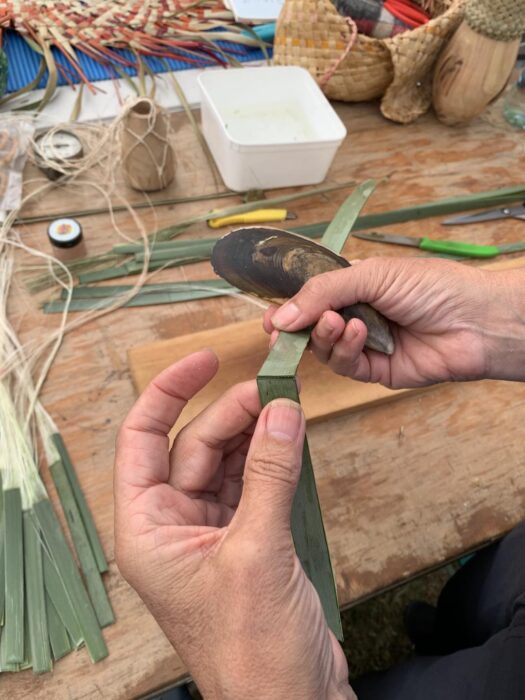
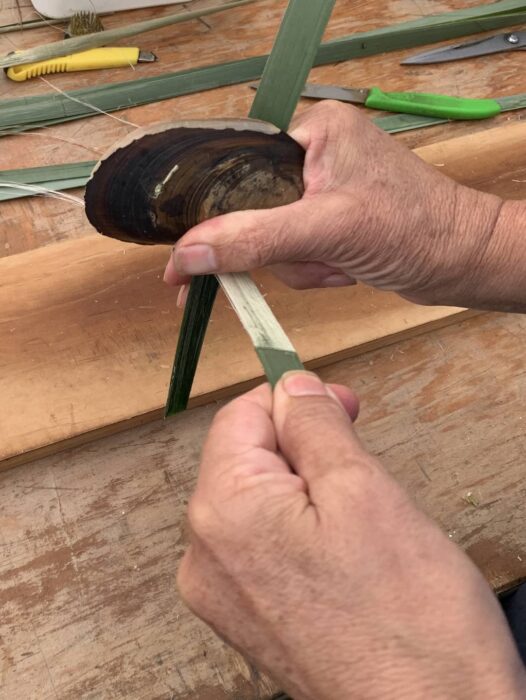
As mentioned above in regards to the naming of NZ flax, harakeke leaf is processed into fine strong fiber. Below, Raewyn uses a shell, a traditional method, to cut into and scrape away the flesh of the outer leaf, revealing the inner fiber, commonly referred to by the Maori word, muka. The quantity of processed muka on the table in front of Raewyn and I represents so much work in and of itself!  In the same photo on the left side, you can see on how the fibers are aligned at the top where Wendy has started to use a finger weft-twining technique (whatu) to bind the vertical warp fibers (whenu), which is the foundation of the amazing tradition of Maori cloak weaving. Honest, there were so many projects happening at this station, I can’t recall what Wendy was working toward with this piece!

Back in 2012, after I had finished my teaching obligations, I had rented a car to do a bit of exploring and visited the Whakarewarewa Thermal Village in Rotaroa. There, I saw my first piupiu, a skirt created by this process of removing sections of the outer flesh of the leaf in a strategic pattern that not only created a color contrast of leaf and fiber that could be accentuated by dyeing, but also a variation of texture and flexibility. As the sections of leaf dried they curled into a cylinder producing a distinct sound when they would rattle against one another as a result of the sway and flex of the muka fibers and the person wearing it. I was fascinated and given a length of this leaf and muka cording as a result of my diligent inquiry, but I hadn’t seen the process actually done until Raewyn began processing the leaves for a collaborative vision that all three weavers were working on.

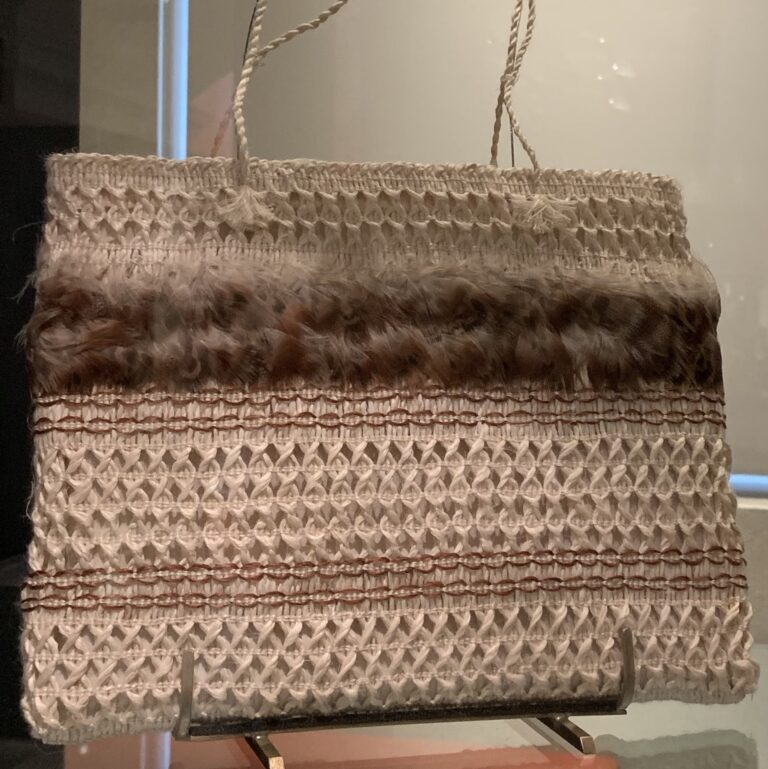
On that trip, eleven years ago, I spent hours upon hours in the Maori Court of the Auckland Museum and had barely gotten through that collection by the end of the day when I realized I had no time for the remarkable work in the other Pacific Island galleries. Fast forward to this recent trip, where I prioritized revisiting the museum before heading north to CollabNZ. Some aspects/pieces were familiar while others seemed new or perhaps it was that I was looking with different eyes while studying the innovative applications and unique aesthetics of harakeke on display. Above left is a piupiu with fine parallel lines cut across the leaf so that this narrow exposure of muka fiber could accept the dark dye and on the right, a meticulous kete of softened muka fibers illustrating the mawhitiwhiti, cross-over technique, and embellished with feathers. Indeed, there had been a redressing or changing out of the textile cases since 2012 and I invite you to visit this link for the museum where the need to do this is explained beautifully and where you can also see an image of the main case where several of these pieces I photographed are currently housed. Needless to say, I barely got through the Maori Court again and luckily had another day to go back for the Pacific Lifeways and Masterpieces Galleries this time. A must visit if you ever find yourself in Auckland!

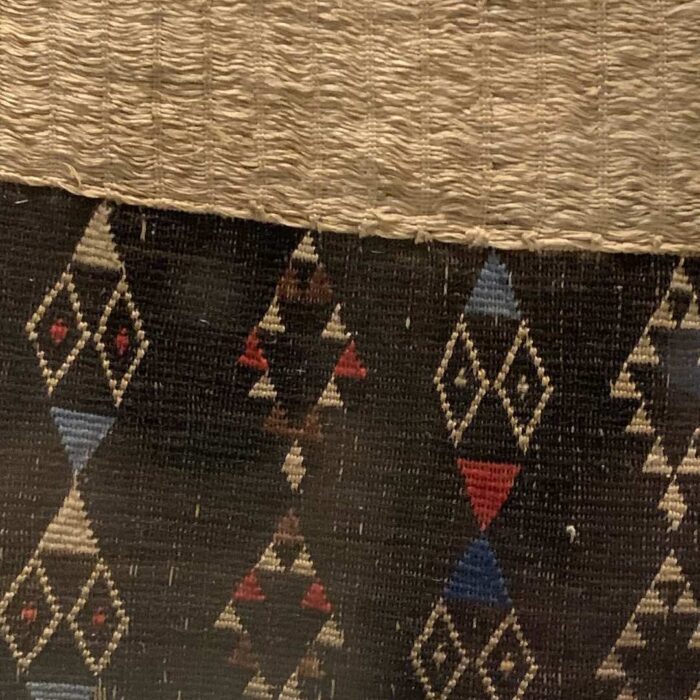
On display in the Auckland Museum, as well as in the tremendous book, Whatu Kakahu/Maori Cloaks published by the Museum of New Zealand Te Papa Tongarewa, which I had brought home with me in 2012, I observed only a small amount of wool fiber in Maori textiles, specifically cloaks. As seen left in the Auckland Museum, pixelated points of colored wool are revealed in the taniko, the dense border designs of the otherwise flexible muka base (kaitaka), by using multiple colored wefts and varying the twist of the weft-twining. Wool was also used in paheke, the looping of yarn into the weft of the muka cloak base to create contrasting linear elements and also in pom poms/tassels, though many tassels were kuri hair, the now extinct Polynesian dog.

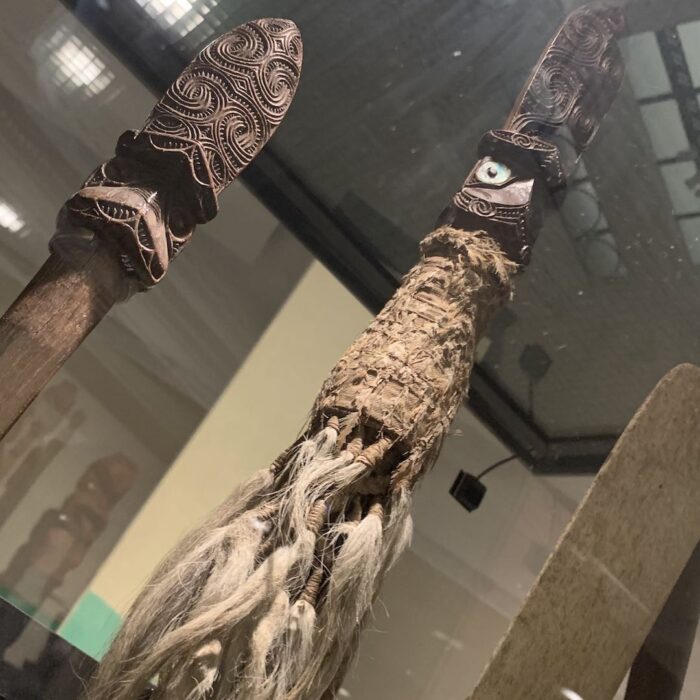
The only sighting I made of anything resembling felt in the Auckland Museum were tassels on the Taiaha, a long staffed weapon with a carved spear resembling a head and jabbing tongue. These awe or dog hair tassels seemed far more likely to have formed into the matted tuffs on the dog though, rather than resulting from the intentional felting by a person.

I began to ponder Maori perspectives of the wool industry that came to Aotearoa with colonization and wools use, or lack there of, in Maori traditional as well as contemporary textile arts. I, an artist working primarily with wool, am interested in ideas of space, boundaries and intertwinement and find apt sociological metaphors in the felting of individual filaments or groups of filaments into a singular mass of felt. I thought perhaps the collabing of native harakeke leaves and wool felt could speak symbolically to colonization and reconciliation or, at the very least, the proximity and merging of different cultures.

Elke was game for a collab and we decided on a circumference for the midline of the vessel form. She built the base from harakeke early in the week and I was to develop what would be the shoulders and neck of the vessel. I have never woven flat strips of bast fiber into 3D form and had a lot of preconceived ideas as to how the harakeke rim of Elke’s form could integrate into small slits I intended to make around the belly of my felt form. Elke, I will take the liberty to say based on our conversations, was similarly unknowing of how my felting of a very large layout with what looked to be surface designs would become a postured form with armature-like protrusions using extreme differential shrinkage and directional fulling. 

So there I was, well into the evening of the last making day of Collab NZ 2023 when my felt for the top of the vessel had dried. Not knowing how to bring these two halves into one unified form as well as the metaphoric weight I had placed on the piece, I procrastinated, prioritizing other smaller projects with more confidence. Though overlapping the harakeke edge with the wool felt and the need for a third party (a needle and linen thread moderator) to bring together the two different materials/processes is less graceful, visually and metaphorically, then I had hoped for, Coming Together was “collab good.” We can keep trying over the distances that separate us, in fact, this is the best metaphor of all.
Posted on Leave a comment

CollaboratioNZ 2023 -Part 1 Structural Change
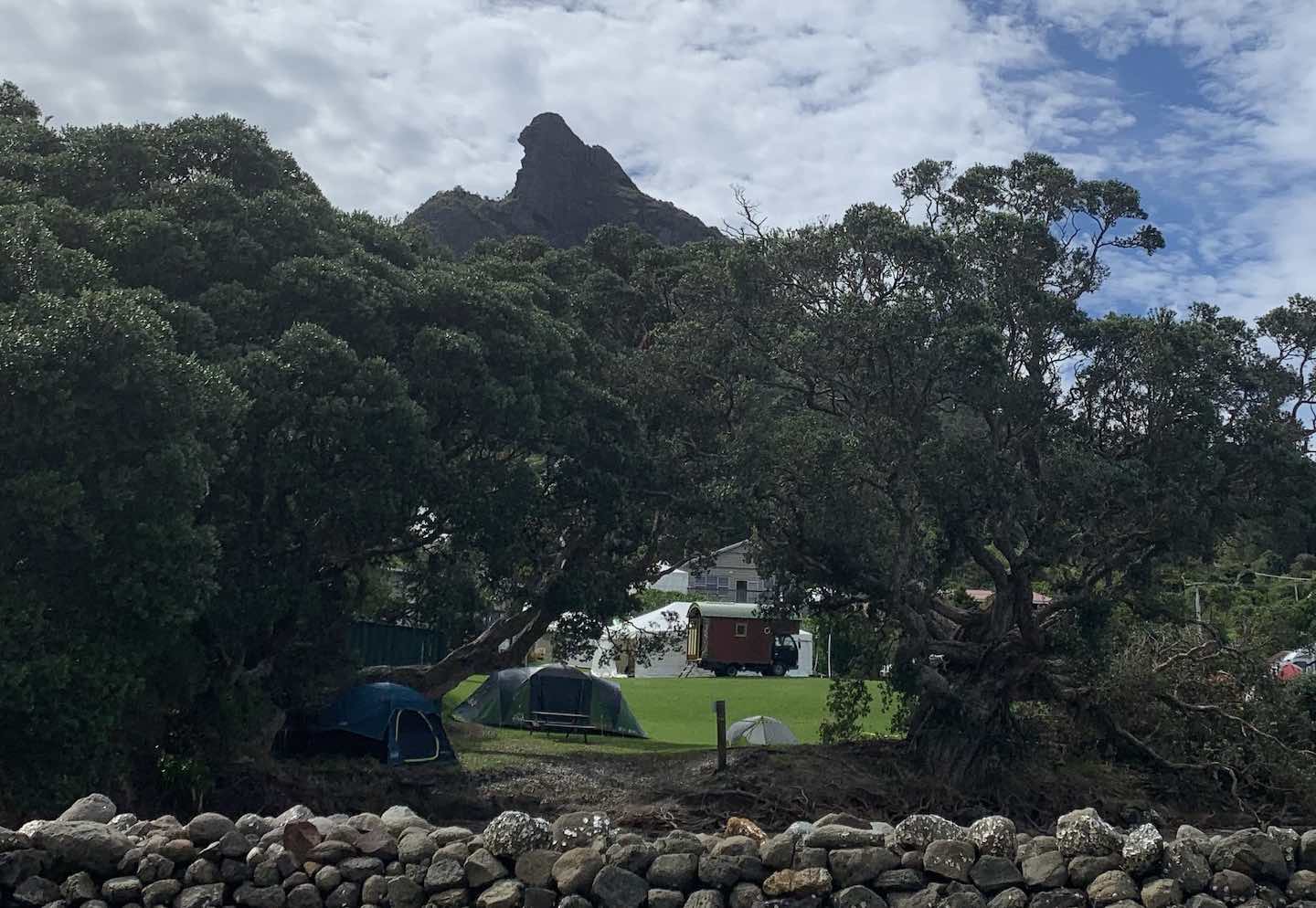
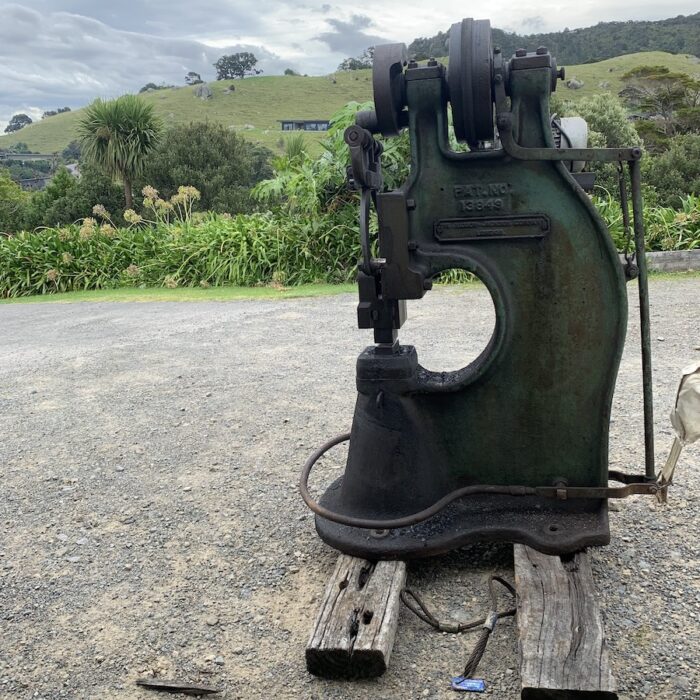
I arrived at Whangarei Heads, the location of CollaboratioNZ,  a day before it officially began as I was keen to lend a hand, stake out my tent site, see what all goes into the set up and to meet the committee members I had been corresponding with for the past year.  Honest, I was also ready to get out of the hustle of Auckland’s city center and into the slower pulse of the remote Northland of New Zealand. Ha! So I thought! There were so many moving parts on the grounds and the electricity wasn’t even turned on yet! In just about 3 days, the Mt. Mania Baptist Camp was turned over into an adult art collaborative residency with a marquee for stone carving, ceramics, blacksmithing, fiber, glass, neon & 3D printing, mixed media, jewelry, print and wood working! Quite a feat on 3 different levels of terrain and yes, indeed, even a power hammer was brought to the site!
Collab began the first evening, March 10 with a ceremonial opening based on the Maori powhiri. The Collab welcoming involved those who had been participants for many years receiving those of us who were new to the event in the communal hall where we greeted one another, shared our first meal (and all those to follow) and viewed images of one anothers’ work. I appreciated this sharing of cultural perspective led by the Maori participants for our particular setting. Thank you. 

Now the art making begins…

MANY WAYS TO COLLABORATE

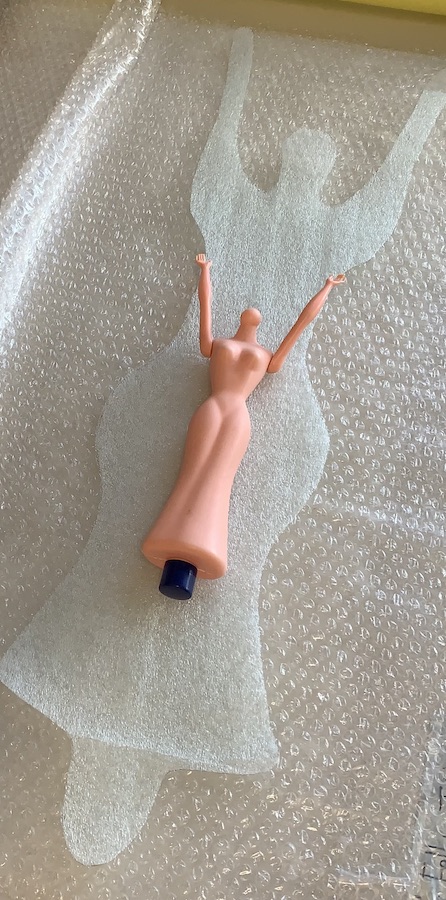
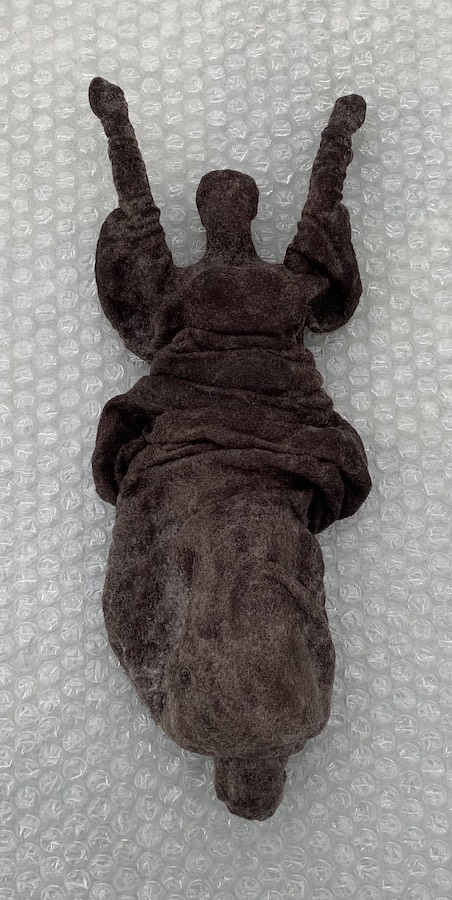
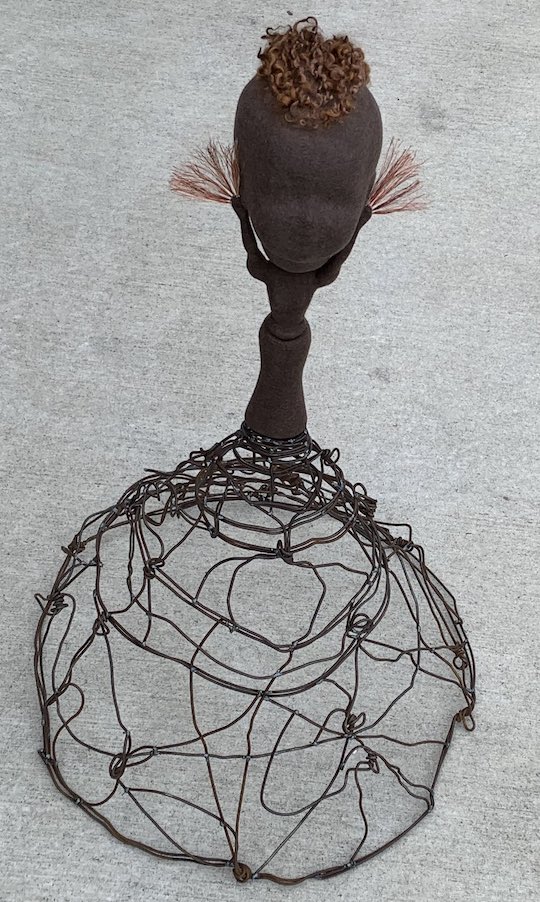
One of the jobs I had during set-up or “mucking in” was to distribute resources from the main storage container to different media areas on the grounds. There was a cacophony of materials and found objects waiting to find harmony in the hands of makers. As someone who finds apt associations between my media of choice, felt (matted animal hair made into a skin-like substrate) and the human figure/experience, I picked up this barbie doll-like form and never put it down. The ridicule for the supposedly ideal proportions of the doll or the absurd, non-human color of the skin is nothing new. It was, however, the immobilization of the legs into a skirt, the alteration of the doll into a vessel and the placement of the opening to hold shampoo/soap (so I thought…it was actually full of talcum powder!), not to mention the headless or small featureless head that further perturbed. I had never seen one of these before and I decided to collab with this object to change the story by creating a new skin while also sharing with the Collab community the working of felt very thin into a hollow form that could be shrunk down over a form to reveal its contours, or in this case, structurally change them.

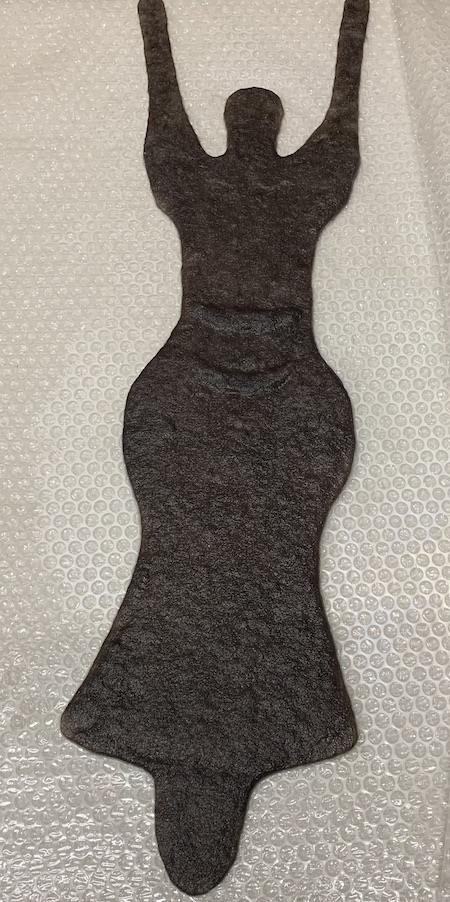
I set about with the mental and mathematical process of flattening the form into a 2D template that was enlarged to accomodate the amount of shrinkage I would achieve with the weight of wool I would envelope the template with. I had access to a beautiful natural color in a fine quick felting wool,  which is ideal when working this thin, thanks to the efforts and connections of Collab committee member Wendy Naeplfin. I made some thicker sheets of felt that I had partially felted to a specific density allowing for shapes cut from it to retain their shape, but to also have enough shrinkage remaining that they would incorporate into the thinner skin. I added denser partial felt shapes to the figure’s lower belly (as you can see in the middle image above), to her upper arms and to her behind. I opted not to give her droopier or lopsided breasts, as I wanted the barbie doll figure to still be recognizable. I rolled the felt in bubble wrap to start the fibers integration, cut a hole to remove the template, slid the plastic form inside and stiched up the cut. I then began the process of sculpting the new form by directional agitation of these different weights of wool until the skin was snug against the plastic, the denser shapes in the right locations to create this new form.

On a side note, I’ve made a number of figurative works with felt using a variety of methods including encasing a baby doll form in a wool & silk skin and using this differential shrinkage method to sculpt a face, but I had never modified the form of a pre-existing body in such a manner. In the past few delirious days of jetlag, I came across some posting by Jason Freeny of @gummifetus who is also exploring the alteration of barbie doll forms. Maybe check that out if this idea interests you!

PUBLIC OPEN DAY

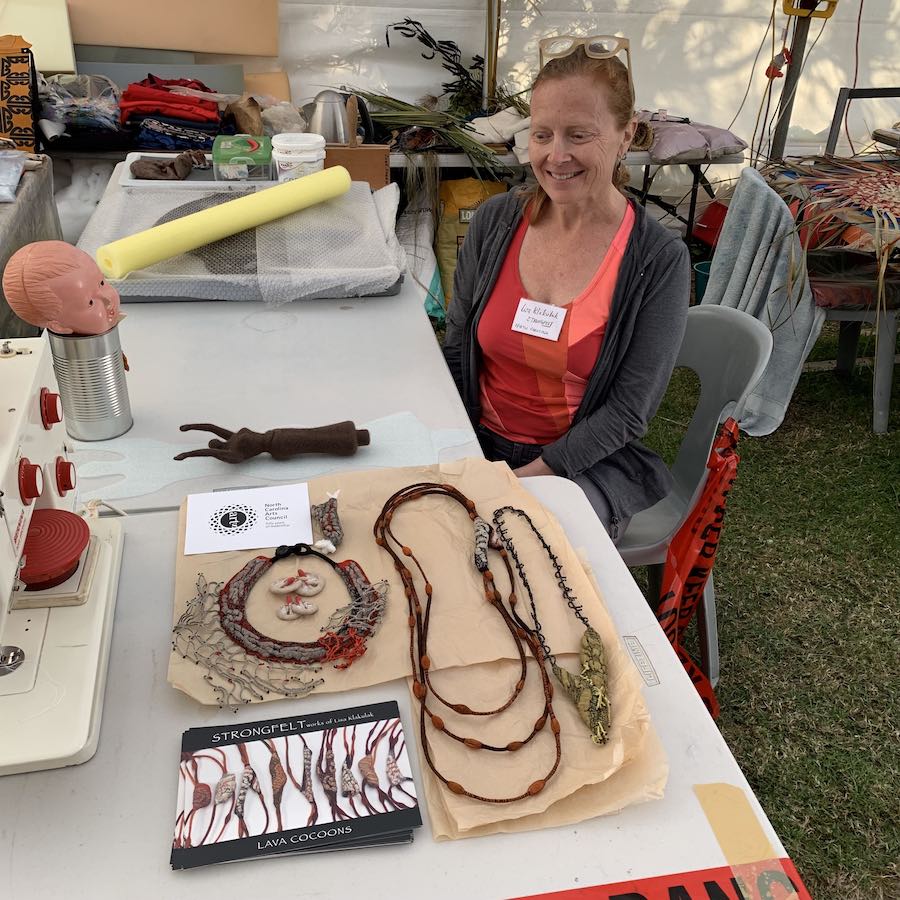
Collab began on a Friday evening and I managed to make samples of the wool I had access to, to get this felted figure finished and layout another template for what would become the figure’s head before the Public Open Day on the following Tuesday. We had a constant flow of visitors come through to see what we were making and perhaps set their eyes on pieces for the auction the following Saturday. Above, you can see the figure in front of me, a large doll head and the even larger prepared layout in my tray at the end of the table that I would be felting  around that head during this 5 hour event.  Also on my table, there are a few pieces I brought from home as examples of my work and in particular, pieces from a body of work I had made inspired by my last visit to the Pacific Islands when I was a guest workshop teacher for the Hawaii Craftsmen in 2017. And lastly, but prominently, I also displayed the logo of the North Carolina Arts Council that had awarded me an Artist Support Grant which in addition to the support from the CollaboratioNZ Trust made this trip possible. Thank you.

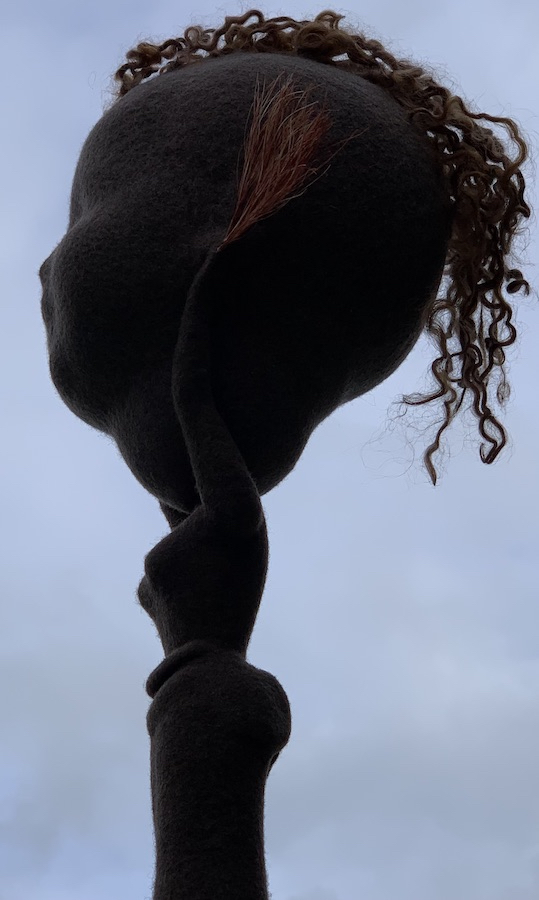
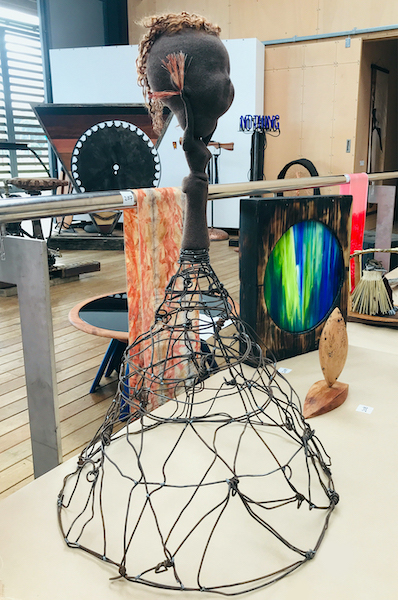
At this point in the Collab, having made connections with one another, seeing how others work and what materials they brought, the structure of this felted figure was about to change. Kath Batchelor, who works primarily with found objects, had quite the collection of doll parts and she offered up a big head of brains for the felted figure.  I also had a chat with sisters Amy Lynch & Katie Baptiste, who work with repurposed colorful 44 gallon steel drums in their creative buisness, METcALfe. I was drawn to the color of their metal work and thought it would be an interesting and surprising contrast to the natural wool colors. I was thinking the figure needed some sort of mount or base and as she had a strata volcano shape, wouldn’t it be appropriate that her base be made from a container that holds the earth’s fuel? They were game for making her some sort of metal base and suggested the head of the felt figure have a mohawk. Perfect! I had found a stash of just enough copper colored locks on the fiber resource table to make a good representation of a fiery lava flow from her head. 

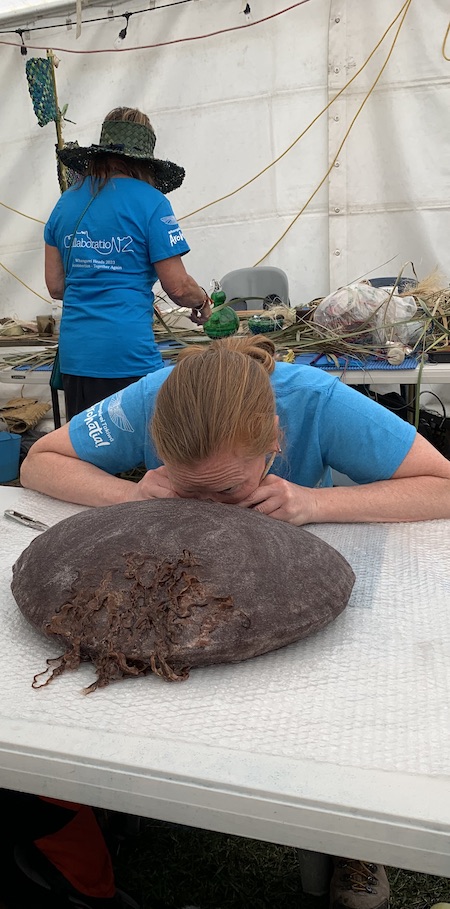
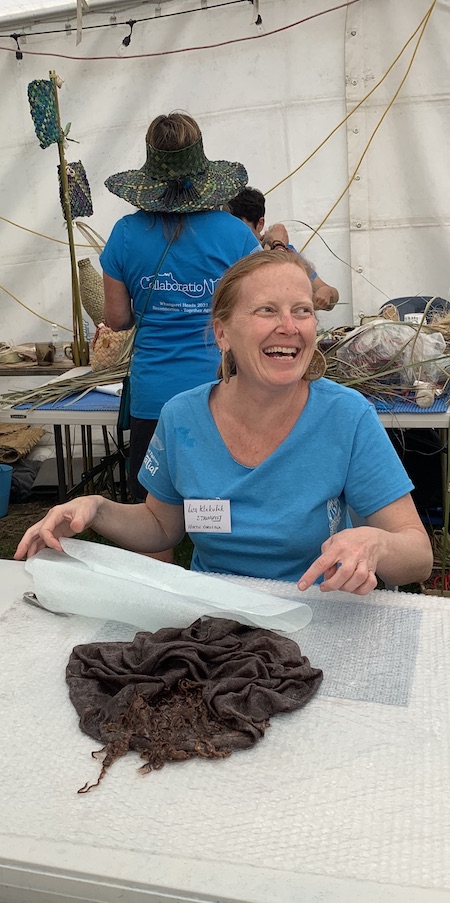
A big thanks to fellow Collab artist Todd Sheridan who happened through the fiber tent at the ideal moment to document my inflation of the figure’s head in the images above. This helps loosen the felt from the surface of the resist to make it easier to pull it out of the small hole cut in the felt and well, it is also just fun to inflate things! Also, thanks to photographer Tania Whyte from the NZ Herald’s Northern Advocate who came by Collab for Public Open Day and captured 10 fab images of enthusiastic Collab artists rocking their blue shirts. Check out the article by following this link!

Amy & Katie began working on the figure’s base the next day and their vision was one of a more knarled appearance than I had originally envisioned from looking at their work. There are many ways to collab. Some people will ask for a specific component to be made for a vision, while others will put forward and idea and see what the other artist(s) come up with. I did like the linear, fiber-like quality of this base made by bending, twisting and welding the repurposed steel rod. It reminded me of the fluid, yet hardened, pahoehoe lava flows I had seen on the Big Island of Hawai’i. I would also see in my post Collab exploring how its configuration represented the knarled volcanic rocks along some of Northlands coastline that the NZ sisters would know better than I.

I was aware of Pele, the Hawaiian volcanic deity and so asked Jo Tito, a Maori artist making paper with Harakeke flax in the Collab fiber tent, if there was a Maori deity and she spoke of Mahuika, whose fingers were flames. Another Harakeke artist, Wendy Naepflin had some muka fiber processed from the plant which had a naturally occuring redness. I used it to extend the felt figure’s fingers into a fan of flames, creating a regal collar of sorts as the hands supported the weight of her big brains. These fine muka fibers remind me of a phenomenon known as Pele’s hair where molten strands of volcanic glass are creating by the bursting of gas at the surface of a lava flow. I’ll share more about the Harakeke in the next blog posting.

I named the piece “Structural Change” and submitted it to auction with my name and the sisters, Amy Lynch & Katie Baptiste. In writing this blog post, I now realize that there were many others that contributed, not to mention other moments in time and place that influenced the work. That right there is the heart of Collab for me; the process of making as a means of exchanging and acknowledging just how intertwined we are.

It did, however, become obvious that I needed to take this figure home from the auction and that the base unfortunately wasn’t going to make the fit for my luggage. That metal base awaits in the resource container, from where I had pulled the barbie-doll, like a game of exquisite corpse to be responded to and repurposed at Collab NZ 2025. The exchange will continue as the goal of $70,000, the seed money for the next event, was achieved! 

Posted on

Partial Felt from the Beginning

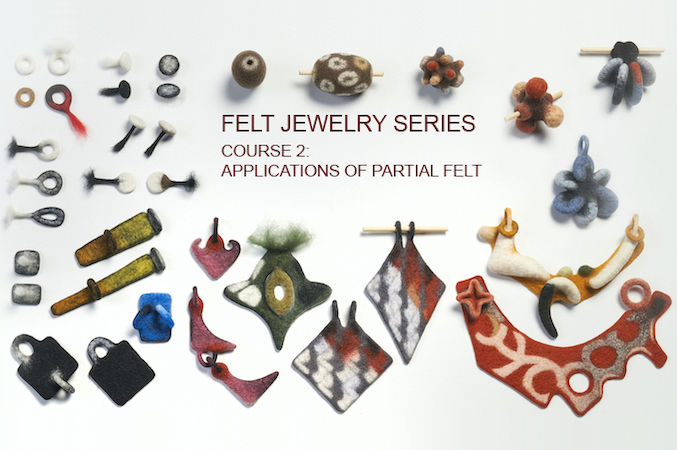
I sat down the other morning before my eyes were fully open, but with the clarity of thought to write out the content description for Course 2, Applications of Partial Felt in my Felt Jewelry Series: Material, Technique & Impact.  You can have a read over on the Online & Onpoint! Coursework page under Course 2, where I define this term Partial Felt that I coined (vs the term Pre-felt) and describe the foundational ways I use it in my work from shaping solid forms to patterning surfaces and sculpting form. 

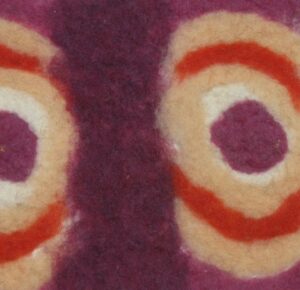
I was recently entertained by looking at some of the VERY FIRST attempts I made at patterning felt (making distinct color areas) back in the early 2000’s while a resident artist at the Appalachian Center for Craft in TN.  Here, I had laid fibers of different colors next to one another to create a felt that was the same front side and back. Indeed, the same irregularity of edges, holes and weak spots between colors on both sides because I was trying to keep the colors distinct rather than make a consistent and strong piece of felt! Ha! 

Historic Felt Strongfelt Lisa Klakulak

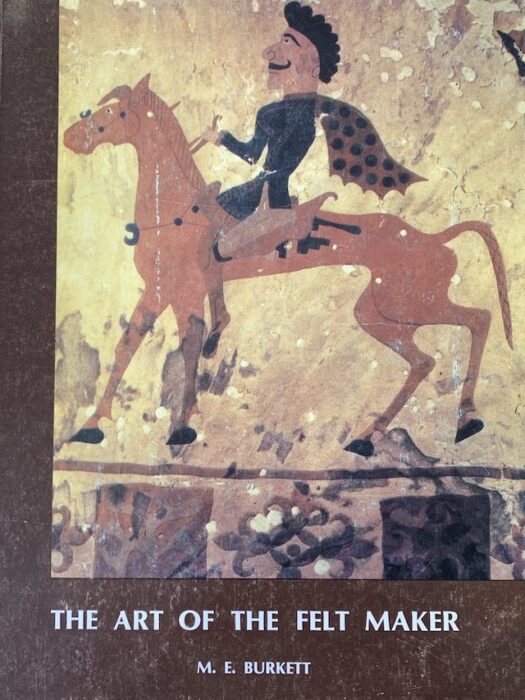
Then, I paid attention to the cover of “The Art of the Felt Maker,” a book I had been given by Janet Taylor who I was honoured to have assisted in a weaving concentration at Penland School of Crafts in 2002. Compiled by Mary Burkett and published by Abbot Hall Art Gallery in relation to an exhibition of the same name that travelled throughout the UK in 1979, the cover is a detail of a wall hanging from the Pazyrk Burial Mounds in the Altai Mountains that was unearthed among items dated from the 7th-2nd Century B.C. 

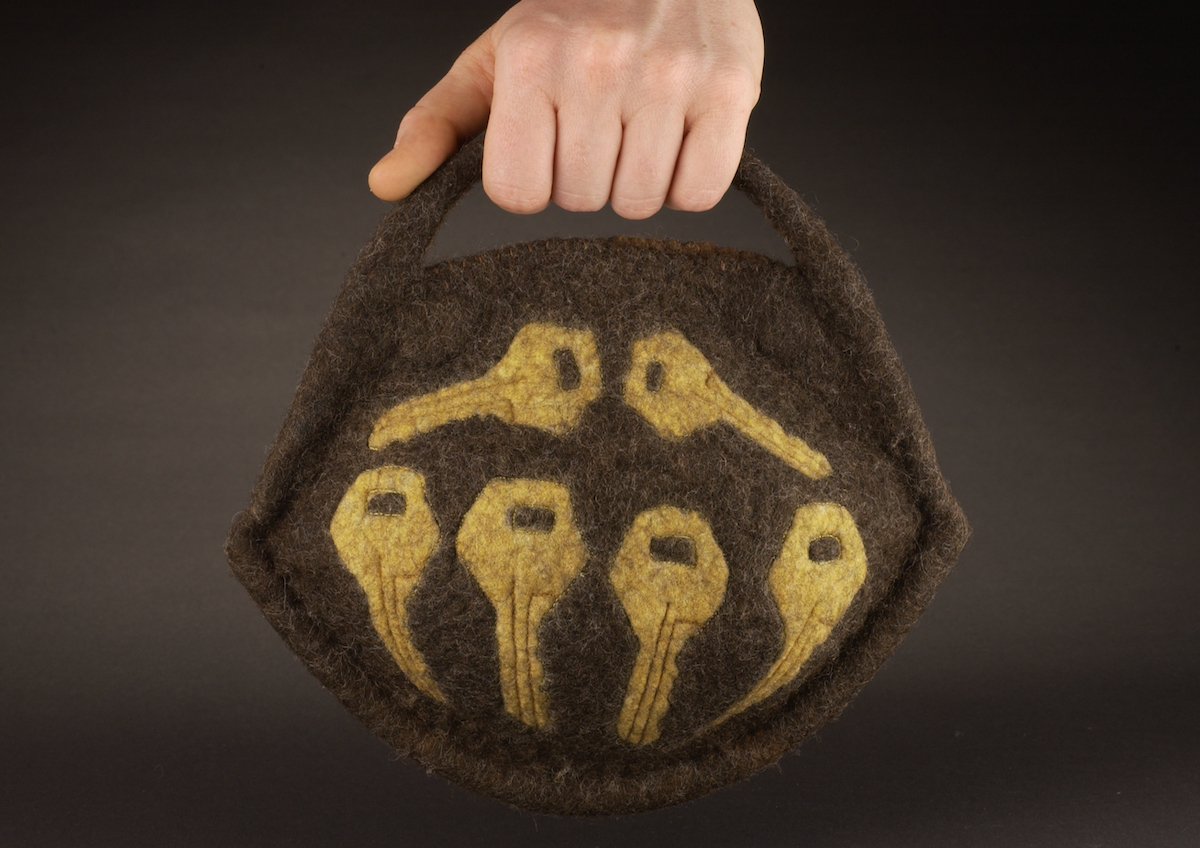
The only means I could think of to achieve such fine shapes/imagery over 2000 years ago would have been to partially felt fine sheets, cut and organize the shapes into images and then felt them into/onto a background of fiber. As natural dyes, of course, were only available at that time, I eventually experimented with felting sheets first and then dyeing them as a piece vs as fiber.  An example of this work is my Key Handbag from 2004 pictured at the end of this post. The concept of Partial Felt was and would continue to be key to my felting practice.


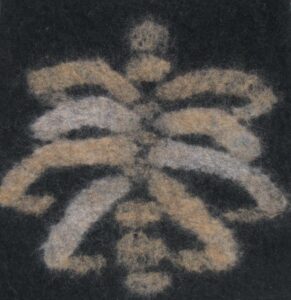
However, I first began felting sheets of commercially dyed wool and cutting them up to make shapes of various sizes based on a less than accurate means of knowing how integrated a piece of felt was. These ideas might seem familiar…use 7 layers of wool or roll 20 times or for 20 minutes and then cut. One person’s 7 layers will be thicker or thinner than another’s and one person’s roll will be stronger or more vigorous than another’s depending on whether they had a hardy breakfast or have arthritic hands, etc. My FIRST PARTIAL FELT shapes, likes this spider inspired design, would fall apart-disintegrating at the edges depending on the size I cut them and that wasn’t the only reason…

I’d argue that the human is the biggest variable in the felting process as the agitator and dictator of felting conditions! Ha! I found that tracking my felt by weight per specific area and at what point in the spectrum of shrinkage possible for that weight that I cut my shapes is the most reliable control to create desired outcomes, like edge definition. Felt is a relation of mass and space and with more space remaining in the felt the fiber lengths are not yet highly intertwined, so when cut into small sections, they simply aren’t bound to the mass and blur the cut edge.

Partial Felt as Core
Partial Felt as Surface Patterning
Partial Felt as Protuberant Form

I also found with having this increased level of control so much more was possible with the application of Partial Felt than I had imagined when first inspired by the historic felt pictured on that cover. Above are examples from my work of the shaping, patterning and forming that will be covered in Course 2 in my Online & Onpoint Felt Jewelry Series. Disclaimer: Free-motion machine stitching won’t be covered in this course, but rather will be part of Course 3 with a focus on TEXTURE!

Posted on Leave a comment

GRATITUDE FOR MY HANDS…KINKY PINKIES AND ALL

Greetings. Doing that intro thing for folks new to following this website and to share where I and STRONGFELT are at these days…autumn 2022.

I’m Lisa Klakulak and evidenced by my kinky pinky, I like to work with my hands…following in the tradition of the farming/gardening/project-doing side of my family (the kinky arthritic hands too). I have been sculpting wool fibers in the wet felting process and hand/machine stitching now for over twenty years and not as a side gig or a hobby, but a full-time hustle. Years of my making can be viewed in the WORKS galleries on this website.
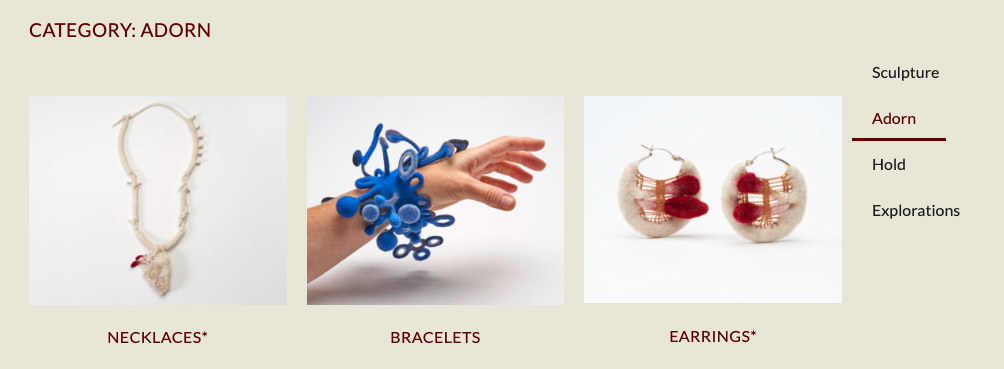
As time has passed, it became more and more apparent that, like the felting process, I was sculpting my own body via shrinkage and compression, through repetitive and directional agitation. I have focused more and more on teaching, finding joy in encouraging others making and the passing on of my approaches to material and process. I no longer do craft shows to spare my joints the agitation of production, as I want to use these hands for intentional projects and conceptual explorations and less for cranking out 20 bracelets, 20 sets of earrings, etc. You can view my most recent, small collection of WORKS from 2022 under ADORN:NECKLACES & EARRINGS.

Since beginning to teach my Online & Onpoint! Coursework, I have very much appreciated having my making filmed one time with a broad and detailed camera and therefore cutting back on using my hands for every demo also. The structure and length of my online courses allow participants to learn techniques AND apply them in a design/idea while supported by my mentoring and other participants encouragement. I love it and am excitedly working on the content of the next 10 week course for release in the spring of 2023. Images below are from Course 1, Foundational Structure.
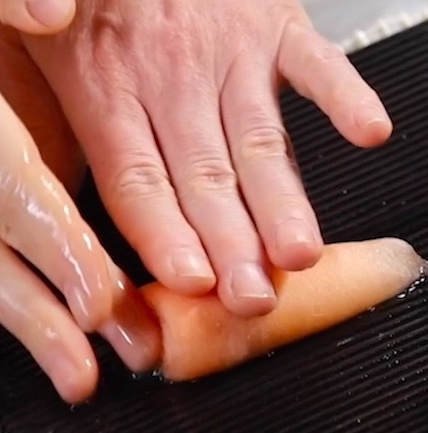
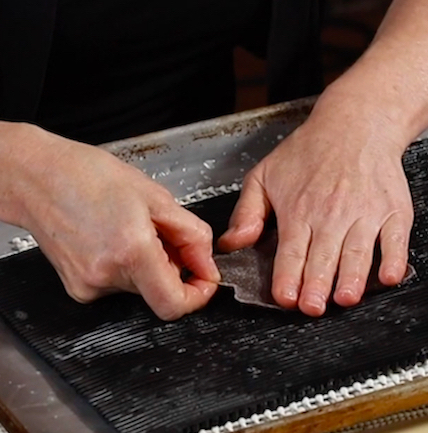
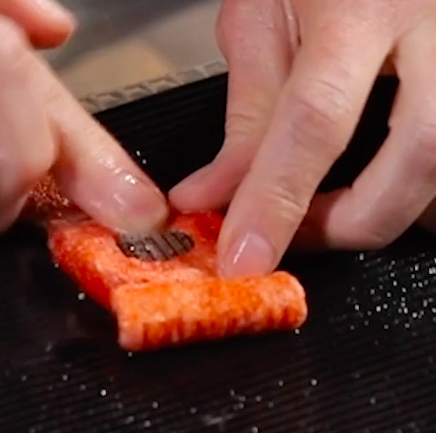
That’s not to say I won’t be out and about in the world offering Face to Face Workshops, in fact, I am reserving my energies for just that…going all out when I choose to travel to teach and when I have a strong idea to make. You can check the TEACHING SCHEDULE at www.strongfelt.com for both Online Courses and F2F Workshops. I’ll be in the Pacific NW, Belgium and Switzerland late summer/early fall of 2023.

Felt the need to post about gratitude for my hands today in all their kinky glory.

Posted on

Blue Reach

I finally remembered to bring this grasping/clasping cuff to a photo shoot with Steve Mann of Black Box Photography to document it properly. It’s only been about 5 years since I made it! Blue Reach now has a featured spot on my website under the Adorned WORKS Gallery, BRACELETS and can be viewed in the rotation of images on the HOME page.

While preparing samples for one of the two courses I had offered at Maiwa School of Textiles in the fall of 2017, Felt Secure: Solid Form Felting Techniques for Clasps & Closures, I had the wild idea of taking all my class samples and attaching them to one plane to make a cuff. It has proven to be a good means to keep all those components in one place, but also to address the need for connection, particularly when one is feeling blue. There are both outward protuberating clasp components, as well as receiving holes, hoops, bridges and tunnels.

It’s timely to have gotten these pics and to share them in this post on my website’s blog, INTRIGUE, as I am working on the content development of Course 2 in my Online & Onpoint! Felt Jewelry Series: Material, Technique & Impact this Fall of 2022. Course 2 will focus on the use of Partial Felt in solid form, 2D plane and hollow form wet felting and will be made in a range of initial layout weights/area and felted to different states of integrity (% of shrinkage) of what is possible for that weight/area. One such application will be using Partial Felt as a core as related to how participants of Course 1 developed solid forms. I got soooo excited about stepping the learning up from the Foundational Structure studies of Course 1 while revisiting each of these clasping components for a little shaving and snipping of stray hairs before the photos.